What This Guide Covers
I should start by saying that this guide does not pretend to list every bird you could possibly see in São Paulo. Indeed, an alternative name for this page could well be ‘The Common Birds of São Paulo’. It is designed firstly to help anyone who is interested in getting into birding or simply wants to know more about the birds they are regularly seeing and secondly, to anyone visiting São Paulo for the first time who would like to get acquainted with the likely birds they might see.
The other thing to mention is that this guide will develop over time as I see more and more birds. I think the page as first published will be enough to cover all the common birds and should be a helpful reference straight away, but hopefully will be expanded over time.
People often tell me that it is hard to track down a bird they’ve seen in a field guide as there are simply too many birds to choose from and many that look similar. I always tell people new to birding to buy a guide with the smallest range possible, leaving the least room for doubt. This is particularly problematic in South America where there are so many species and the field guides can often be very large and not easy to carry around. This guide hopes to help with that issue by limiting the overall number of species shown.
I should also clarify that when I say the Birds of São Paulo I am referring to the city of São Paulo and not also to the State of São Paulo. That would include many more birds and, to be honest, defeat the object of this guide.
Birding From Your Balcony
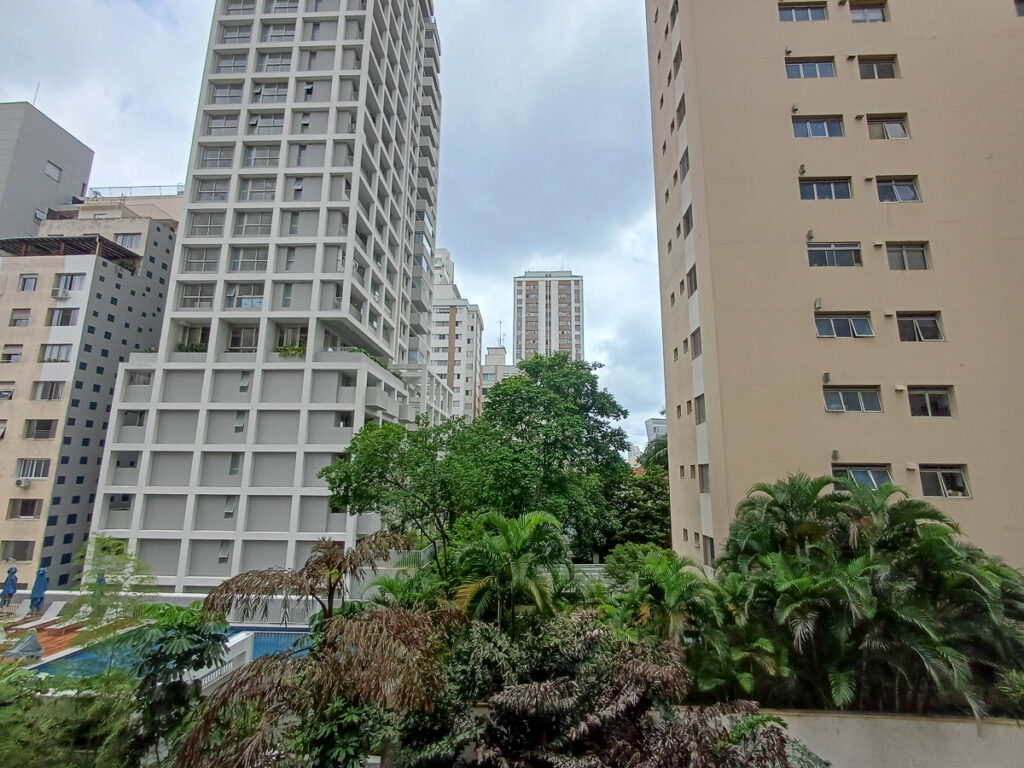
So, where are you likely to see birds in São Paulo? For a start you would do well to simply look out of your window and get familiar with the birds that are in your own neighbourhood. I live in the centre of São Paulo surrounded by skyscrapers and yet the number of birds I have been able to identify from my own balcony constantly amazes me. I now have the advantage of living on the third floor with a good view of some quite mature trees but even when I first arrived and was on the 16th floor I still saw many species including three species of parrot, three birds of prey and many others.
I’m not entirely sure how high hummingbirds will fly up but it’s worth buying a hummingbird feeder and seeing who shows up. I have one and get two different bird species regularly during the day — the Bananaquit and the Swallow-tailed Hummingbird. The real treat, at least for me, are the nectar-feeding bats that come at night and polish off whatever’s left in the feeder. The feeder should be filled with a sugar solution with 1 part sugar and 4 parts water completely dissolved.
Ibirapuera Park
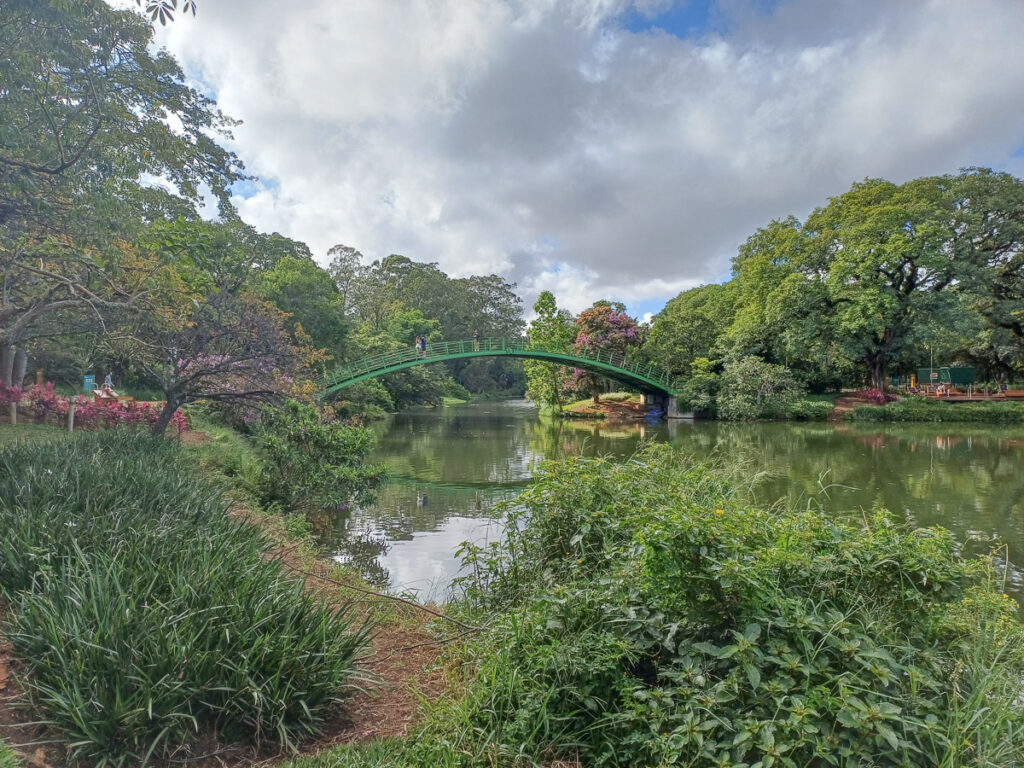
Outside of simply looking out the window or sitting on your balcony, the next place I recommend going is Ibirapuera Park (Parque Ibirapuera) right in the centre of the city. To anyone visiting São Paulo for the first time this is an excellent spot and completely safe. There are security people everywhere and it is gated and fenced.
One quirk I should mention is that if you, like me, enjoy taking photos of birds, you cannot simply get your camera out and start taking photos. You need to get permission first and once you have it, you will receive an orange wrist band that will identify you to the security teams as someone with permission. Getting permission is very easy once you know how. You need to go to the counter where the permission forms can be found. The counter is in the building just south of the Planetarium which, on Google Maps, is called ‘Escola Municipal de Astrofísica’. You simply ask the person behind the desk if you can fill out the photography form. The form does not ask you why you want to take photos. It simply takes contact information and I believe there is one in English. Once you have your orange band, you are good to go. Welcome to Brazilian bureaucracy!
There are two large lakes and other smaller waterways, fields and wooded areas — almost every habitat that a bird could want. After almost eight months I have seen over 40 species in the park, including many of the species listed below, and eBird lists many more, so it is a great starting point.
São Paulo Botanical Garden
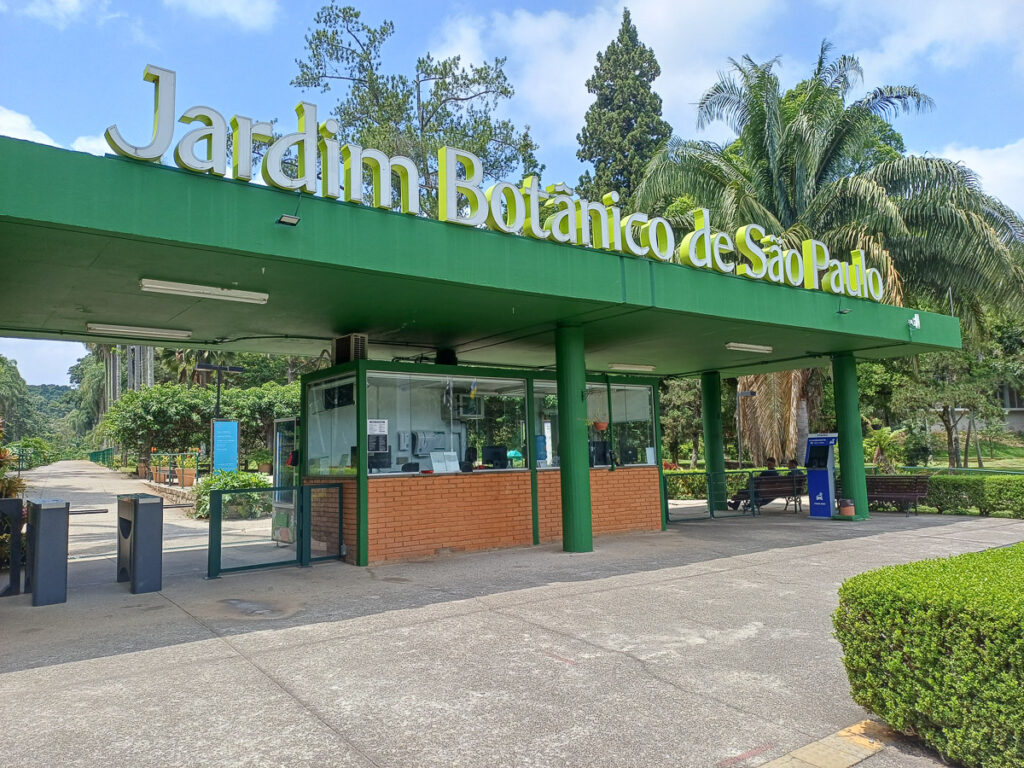
The other great spot I would recommend going to is the São Paulo Botanical Garden (Jardim Botânico de São Paulo). Unlike Ibirapuera Park, you have to pay to get in. It costs about 34 Brazilian Reals and, if you’re driving, the secure parking costs about the same. If you live in São Paulo or perhaps are there for an extended stay you should consider either the monthly or yearly pass. It is even safer than Ibirapuera as there is a turnstile to get in and the whole park is fenced. You might notice a sign about having to pay for photography but that isn’t for birders — it’s for pre-wedding photos for which the gardens are popular.
As you enter the Botanical Garden there is a really obvious walkway straight in front of you. Instead of taking this path I immediately turn right and get on to the big wide road. Walk along this road on the right-hand side and you’ll see two large ponds with great birds. You can walk right up to the lakes and the second one often has nesting herons of different species. (There are also two non-avian highlights in this area which are Brazilian Guinea Pigs and even Nine-banded Armadillos.)
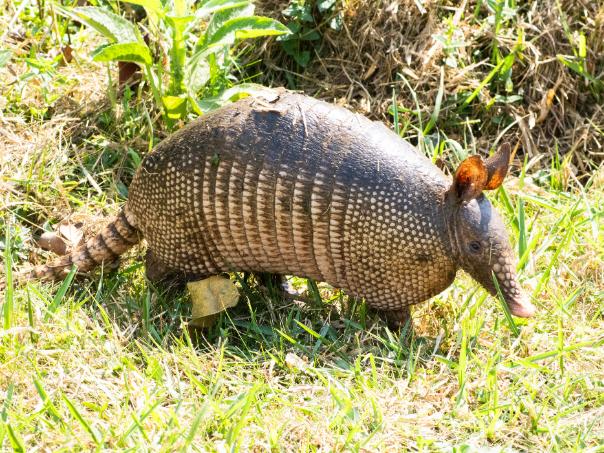
Walk on past the second pond and there is a large lake at the end of the road — also great for water birds. Then you have to turn back and can visit the rest of the gardens. The other huge non-avian highlight are the Howler Monkeys which are fairly common there. The noise they make is astonishing and if you’re lucky they might do it right above your head (here’s a video I got).
How This List Is Organised
So, now on to the birds. The order in which to list them is always tricky as I never know what my reader is looking for. I have chosen to go with a few really common species first so that people dying to know what that noisy bird they keep hearing is can quickly identify it without scrolling forever (spoiler alert, it’s the Great Kiskadee). Afterwards, the birds are grouped broadly by family while keeping habitat in mind, so that birds you are likely to see near water, for instance, are not scattered randomly throughout the list.
I hope you find this guide useful and remember, it will be added to over time, so if you don’t see what you’re looking for the first time, it might be worth checking back in a month or two.
The Birds You’re Most Likely to See
Great Kiskadee
Pitangus sulphuratus
Key features: bright yellow belly, bold black mask with white eyebrow, loud “kis-ka-dee” call.
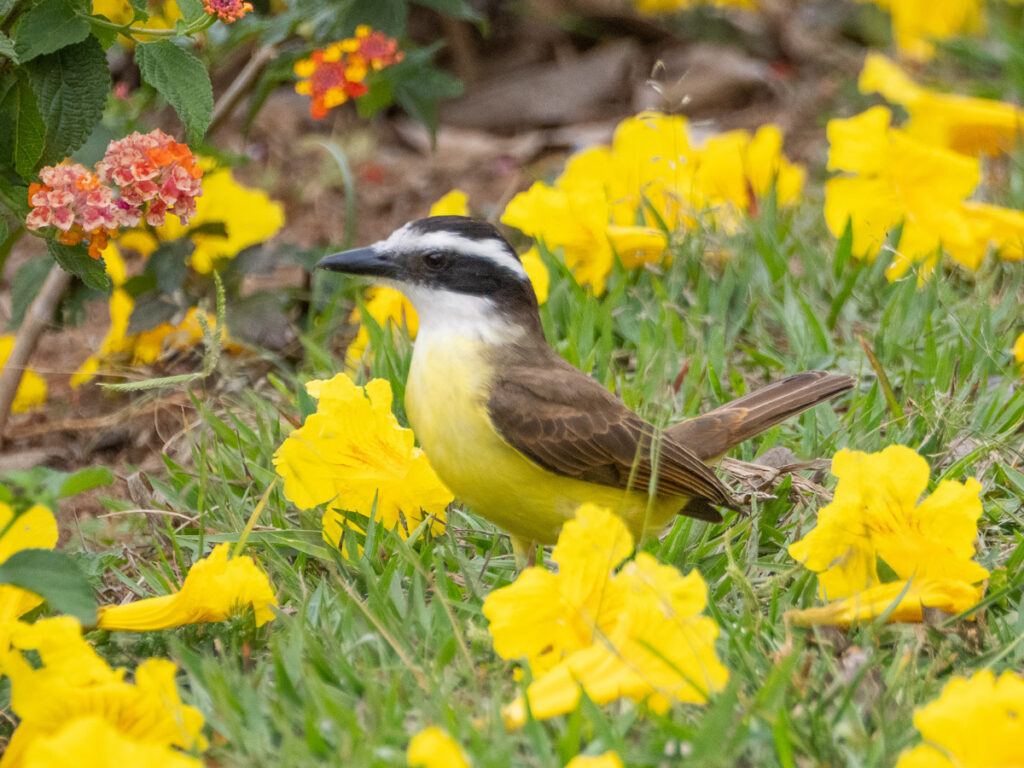
One of the most common and unmistakable birds in São Paulo, the Great Kiskadee was the second bird I noticed after arriving in São Paulo. Even if you’re not interested in birds, if you live in São Paulo you will know its call. It is generally a three-note call and the name reflects this — “Kis-ka-dee”. There are at least two other birds with similar colouring and the video below gives you some pointers on how to tell them apart, but in the main the call gives it away. It is one of the most common birds in the city.
Rufous-bellied Thrush
Turdus rufiventris
Key features: orange belly, soft brown upperparts, rich fluting song often heard early morning.
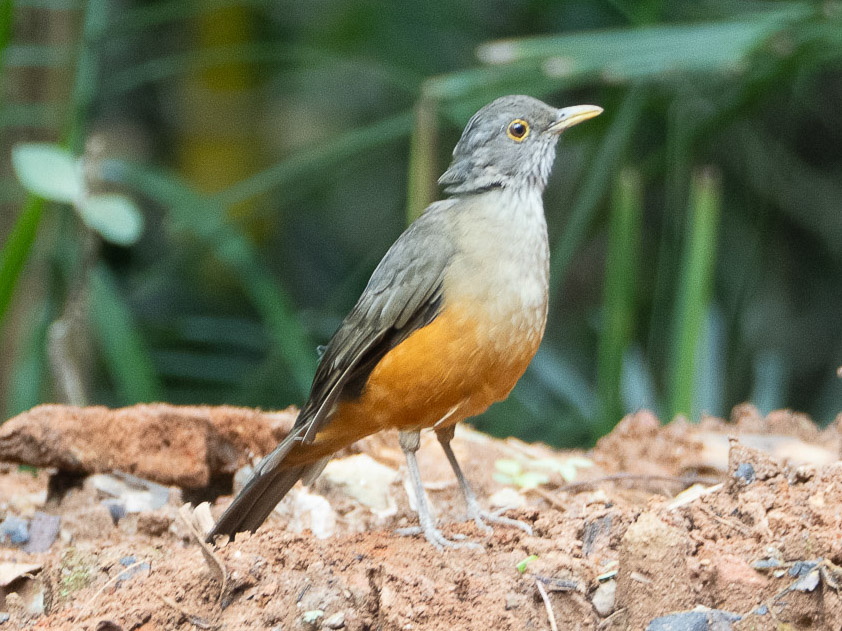
Another bird with a distinctive call but you’re not as likely to see the bird actually making its call. You might well hear it in the early morning and I would encourage anyone to go on to ebird and listen to the song. You might find you already know it. The tell tale feature is its orange belly. Otherwise it is a soft brown colour. Another very common bird in São Paulo known locally in Portuguese as ‘sabiá-laranjeira’.
Plain Parakeet
Brotogeris tirica
Key features: small bright-green parakeet, noisy chattering flocks, common in city trees.

Some cities have a bird noise that is in the background so commonly that you don’t even notice it’s there. For São Paulo this is the Plain Parakeet. An almost all green bird, they blend in well with the trees so despite their noisy chattering, can be hard to spot. Listen out for them and learn the call and you will soon discover that they are everywhere. They will readily come to a feeder but be careful what you wish for – your neighbours may not thank you!
Ruddy Ground Dove
Columbina talpacoti
Key features: very small brown dove, quick direct flight, pulsing repetitive call.
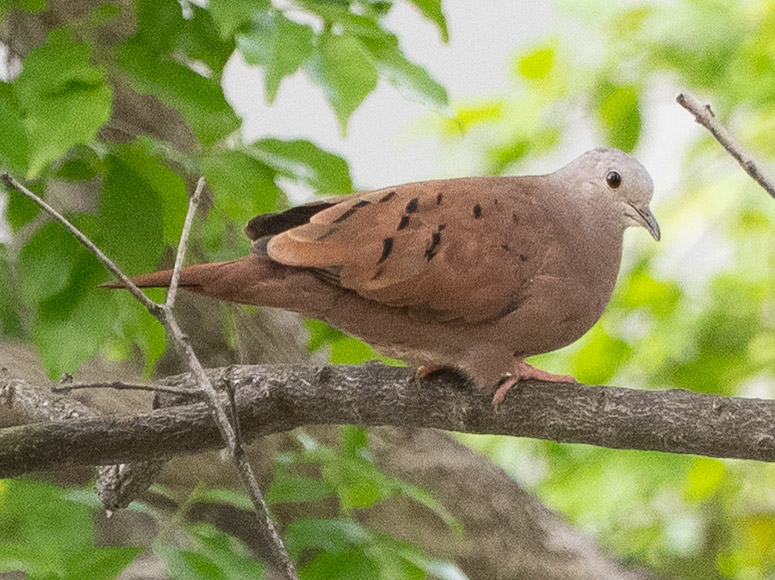
Now on to the pigeons and doves. The Ruddy Ground Dove is the smallest of the common pigeons and doves that you are likely to see in São Paulo and is easily missed. They fly surprisingly quickly and can be furtive. The key identifiers are the small size and brown colour with some grey on the head. Listen out for their pulsing, evenly paced call.
Eared Dove
Zenaida auriculata
Key features: medium-sized dove, pale patch with black lines behind the eye, common urban pigeon.
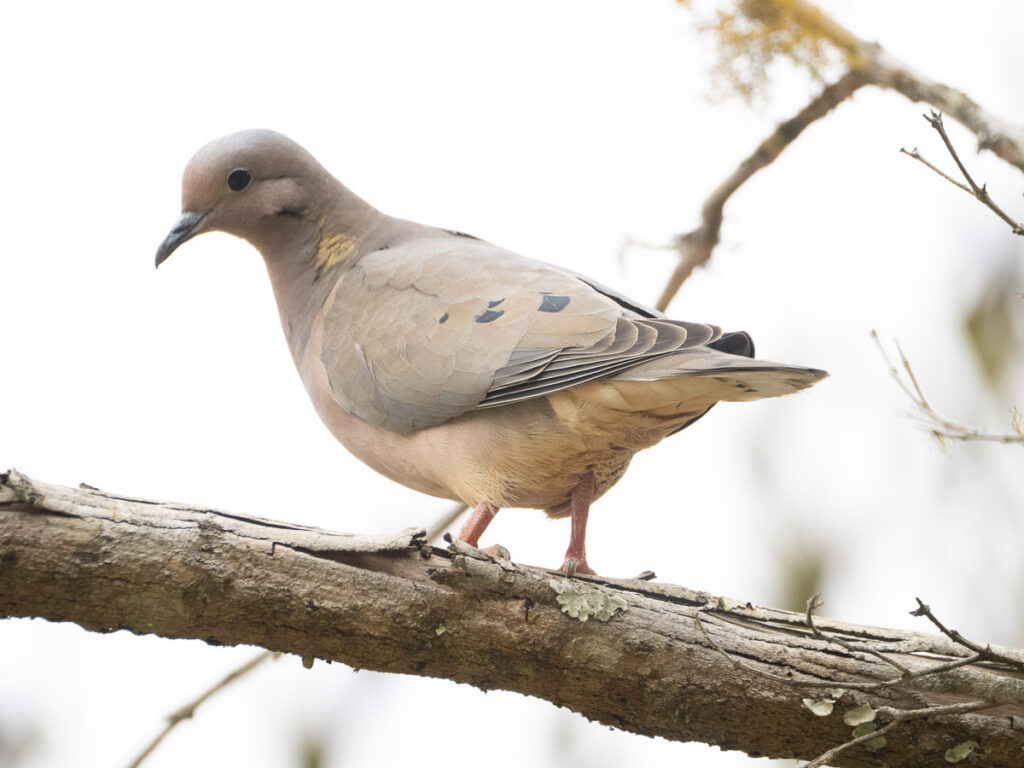
Next in size up from the Ruddy Ground Dove is the Eared Dove. Why eared? Well, look at the space behind the eyes where you might expect ears to be and you’ll see a lighter, creamy patch with two thin black lines highlighting the area. They are a lighter brown colour than the Ruddy Ground Dove and a little bigger.
A video of the Eared Dove can be seen here.
Picazuro Pigeon
Patagioenas picazuro
Key features: large pigeon, scaly neck pattern, pale edging to wings in flight.
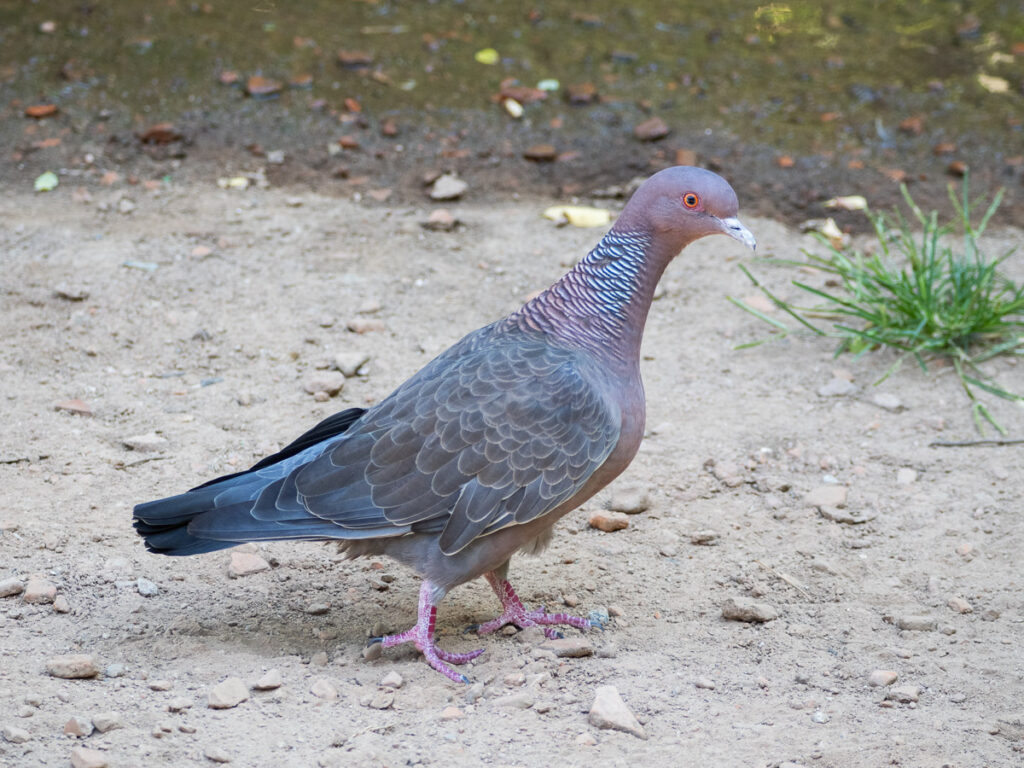
The largest of the common pigeon family birds you are likely to see in São Paulo is the Picazuro Pigeon. The only error you can make here is with the common or feral pigeon but Picazuro Pigeons are larger, have a scaly look to their necks and notice the light grey edging to the wings. This is particularly noticeable in flight.
Common Pigeon
Columba livia
Key features: familiar city pigeon, chunky shape, highly variable grey plumage.
I mention the common pigeon here for completeness and as a reminder not to mistake the Picazuro Pigeon for a Common Pigeon. One word of warning. All pigeons are homing which means that once they decide they live somewhere, it’s very difficult to get them to leave. If you are feeding the birds on your balcony and any of the pigeon family show up, then you might consider changing your strategy.
Swallow-tailed Hummingbird
Eupetomena macroura
Key features: large hummingbird, long forked tail, metallic green body, aggressive at feeders.
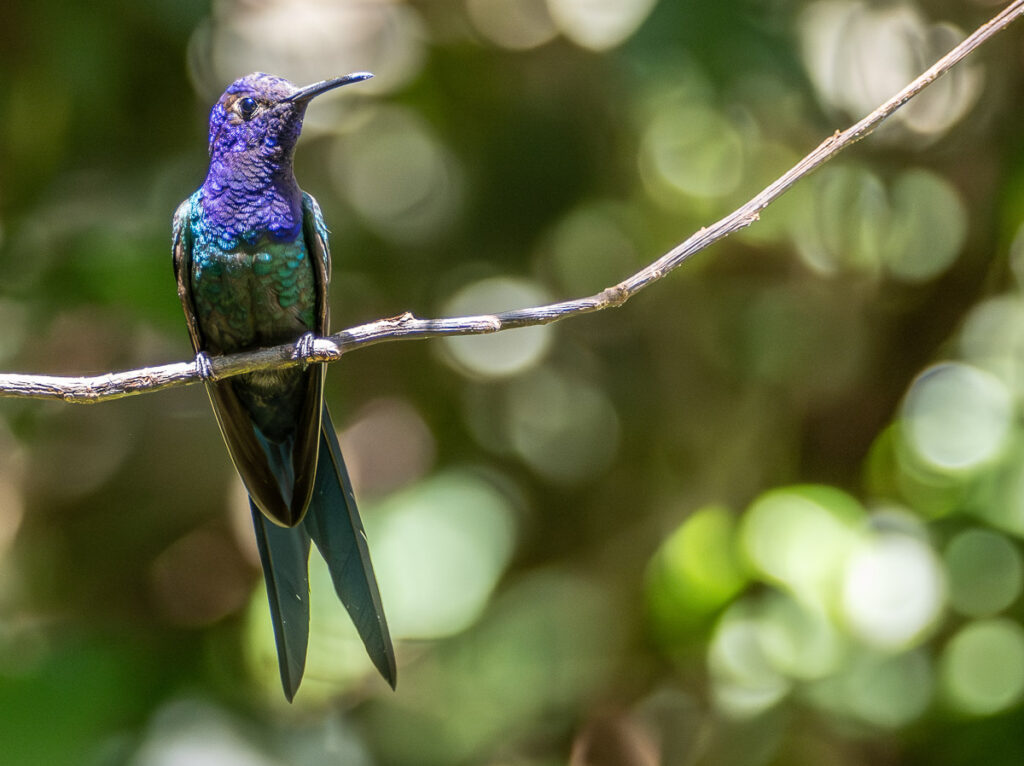
Hummingbirds can be tricky to identify but fortunately, the Swallow-tailed Hummingbird is unmistakable in São Paulo. They are large, for hummingbirds, and have a long tail which they fan out aggressively when defending a feeder. In poor light they look very dark in colour but if you see them in good light you’ll see they are a metallic green colour with a violet head.
Bananaquit
Coereba flaveola
Key features: tiny nectar feeder, curved bill, yellow belly with bold white eyebrow.
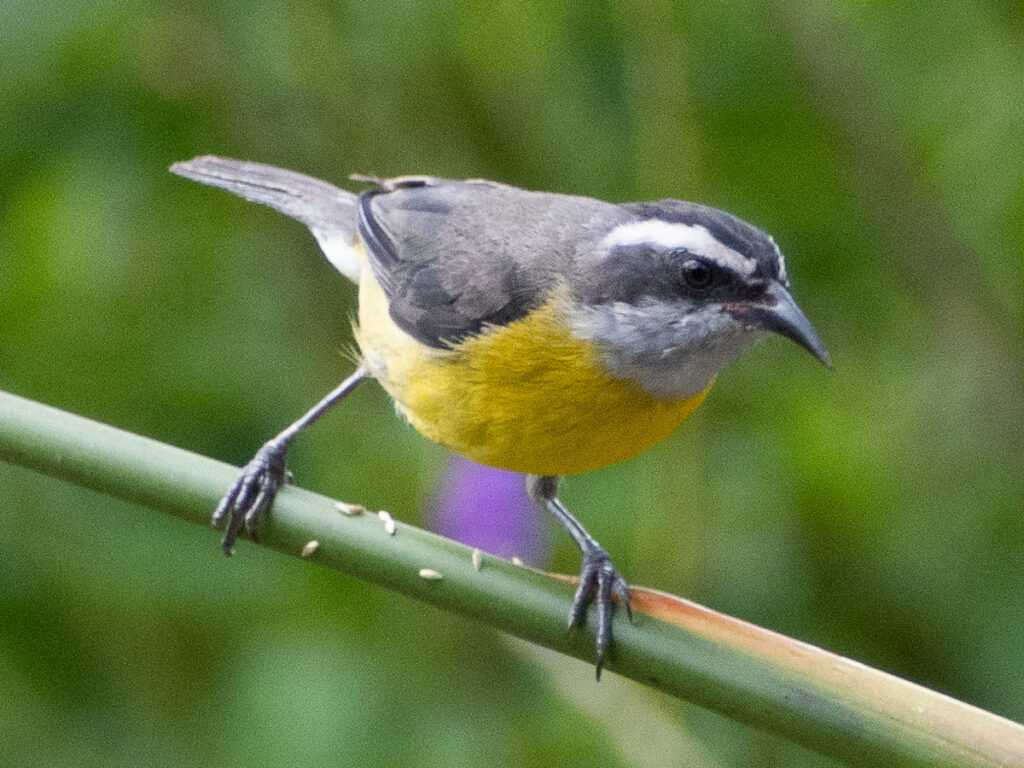
Like hummingbirds the Bananaquit is a nectar feeder and will readily come to a sugar water feeder. Notice the similar colouring to the Kiskadee and many other species in São Paulo. The Bananaquit is very small and easily identifiable with its markings and movements around open flowers.
Sayaca Tanager
Thraupis sayaca
Key features: pale grey-blue tanager, common garden visitor, high-pitched call.
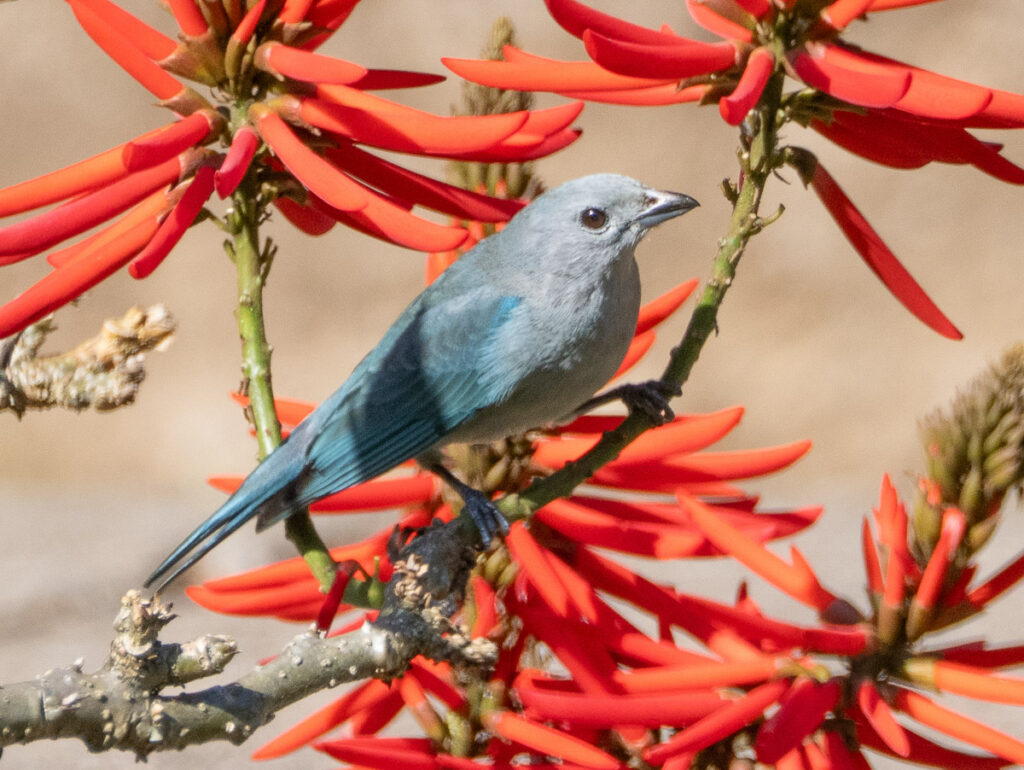
The Sayaca Tanager is by far the most common tanager in São Paulo. It is one of the more drab tanagers, being mainly grey with blue wings. When looking at tanagers it’s always good to look at the shoulder area. There are many tanagers that look similar to the Sayaca Tanager but colouring at the shoulder area gives them away. They have a very high pitched call which is easy to recognize once you know it. If you put out a banana, you may well get a visit from a Sayaca Tanager.
White-faced Whistling-Duck
Dendrocygna viduata
Key features: bold white face, chestnut body, distinctive whistling calls in flocks.
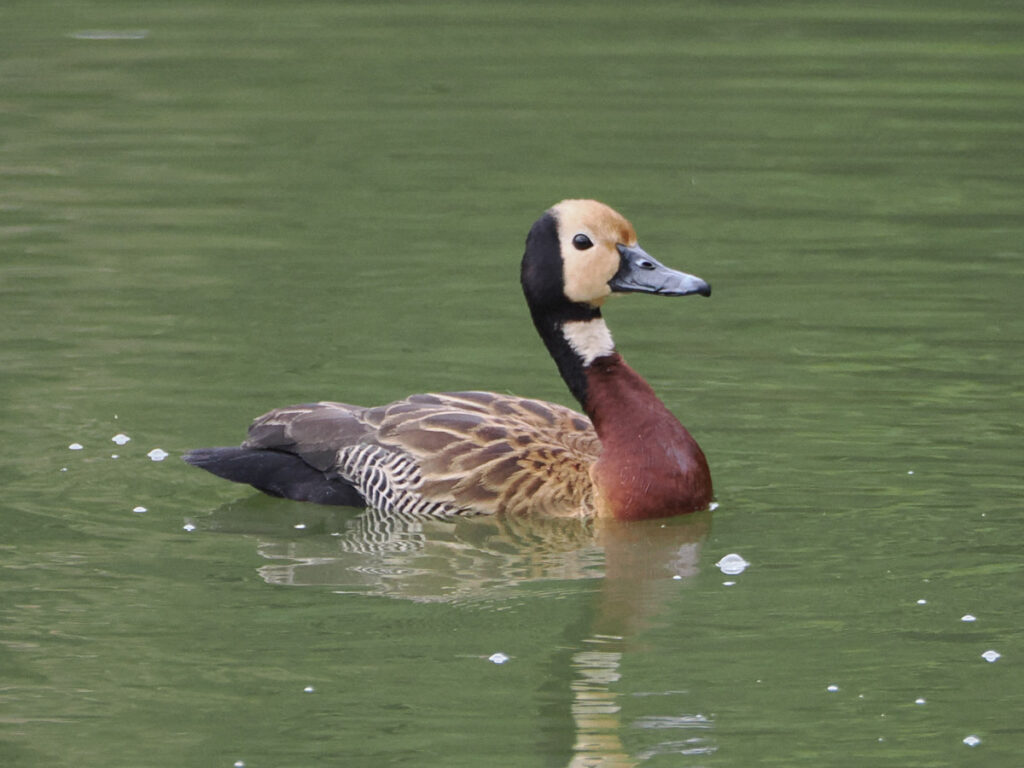
A striking duck and pretty unmistakable with its white face and bold colouring. I have seen them both in Ibirapuera Park and the Botanical Garden. In ones and twos they are fairly quiet but get them in a big flock and you can really hear them whistling usually when they are all flying together.
A video of the White-faced Whistling-Duck can be seen here.
Pied-billed Grebe
Podilymbus podiceps
Key features: small diving grebe, pale bill with dark band, often disappears underwater.
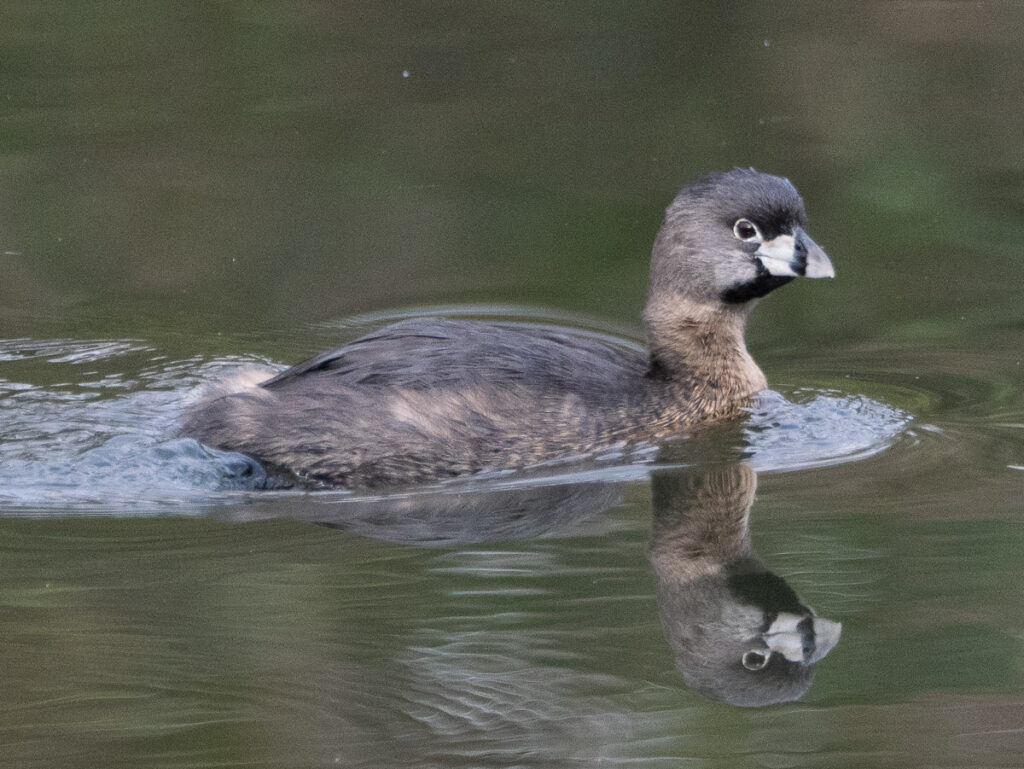
This is a small grebe and are easily identifiable by the dark grey line going vertically through an otherwise light grey or whitish bill. They can be seen on the water often diving smoothly under the surface to look for small fish. The young have creamy white stripes on a brown face.
American Moorhen / Common Gallinule
Gallinula galeata
Key features: dark body, red and yellow bill shield, long greenish legs.
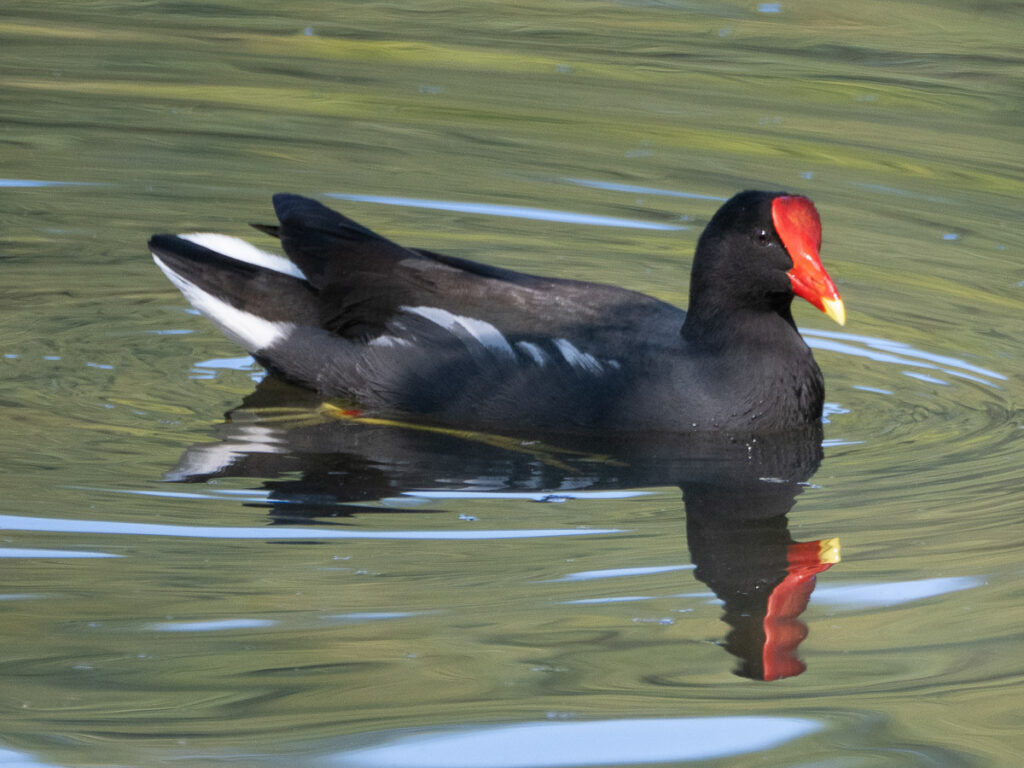
This bird, also known as the Common Gallinule, is the commonly seen moorhen in São Paulo. They are easily recognizable by their black body with yellow and red bill. The young birds are a more drab grey colour and lack the colourful bill.
A video of the American Moorhen / Common Gallinule can be seen here
Anhinga
Anhinga anhinga
Key features: long snake-like neck, swims with only neck showing, often soars high.
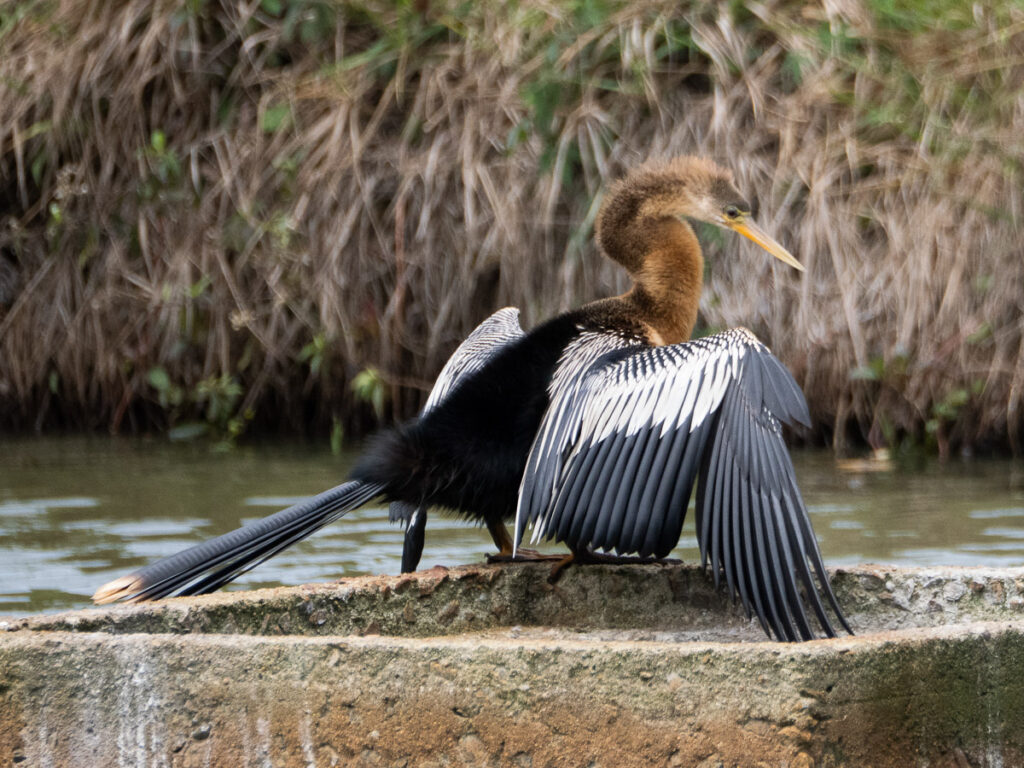
At first sight the Anhinga looks like a cormorant (the next species in my list) but they are actually quite different. The Anhinga has a long, thin, snake-like neck and is often seen swimming with only the neck and head showing. Unlike cormorants they are known to soar (circling high up in the sky) and can sometimes be seen with other soaring birds like vultures.
Neotropic Cormorant
Nannopterum brasilianum
Key features: slim dark cormorant, long tail, common on lakes and ponds.
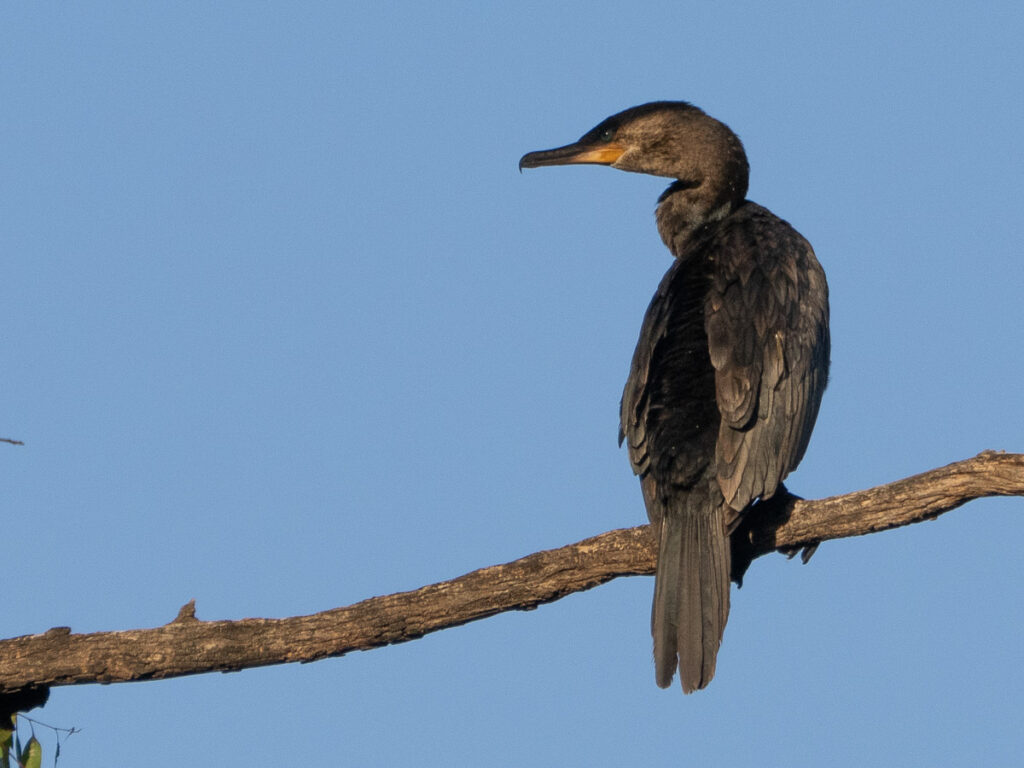
While not the only cormorant in South America it is the most common one by far and the only one found in São Paulo. You can regularly see them on the lakes both in Ibirapuera Park and the Botanical Garden.
Green Ibis
Mesembrinibis cayennensis
Key features: dark ibis with subtle green sheen, long curved bill.
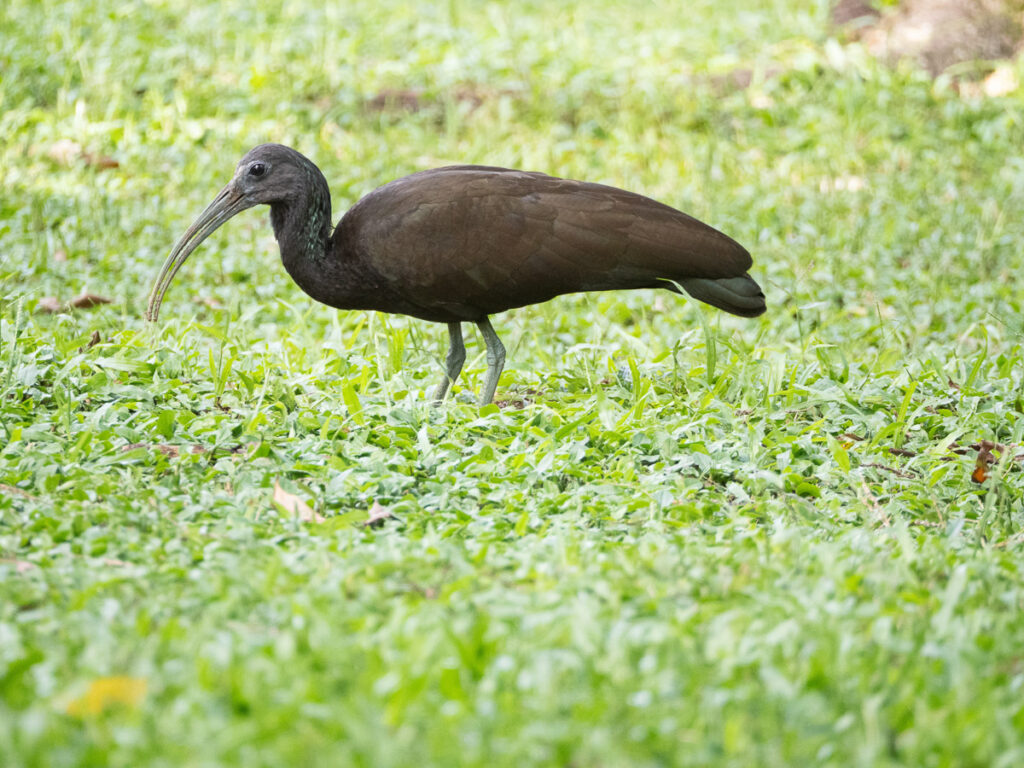
This bird has an obvious beak but its green colour is far from obvious looking mainly a dark grey in most lights. Look at the face area to make sure there is no bare skin showing. If there is then you’re probably looking at the Bare-faced Ibis. At the time of publishing this post I am starting to see the Bare-faced Ibis in the Botanical Garden but I have yet to see it in Ibirapuera so will leave it out of this list for now.
A video of the Green Ibis can be seen here.
Cocoi Heron
Ardea cocoi
Key features: very large heron, grey body, white neck, black cap.
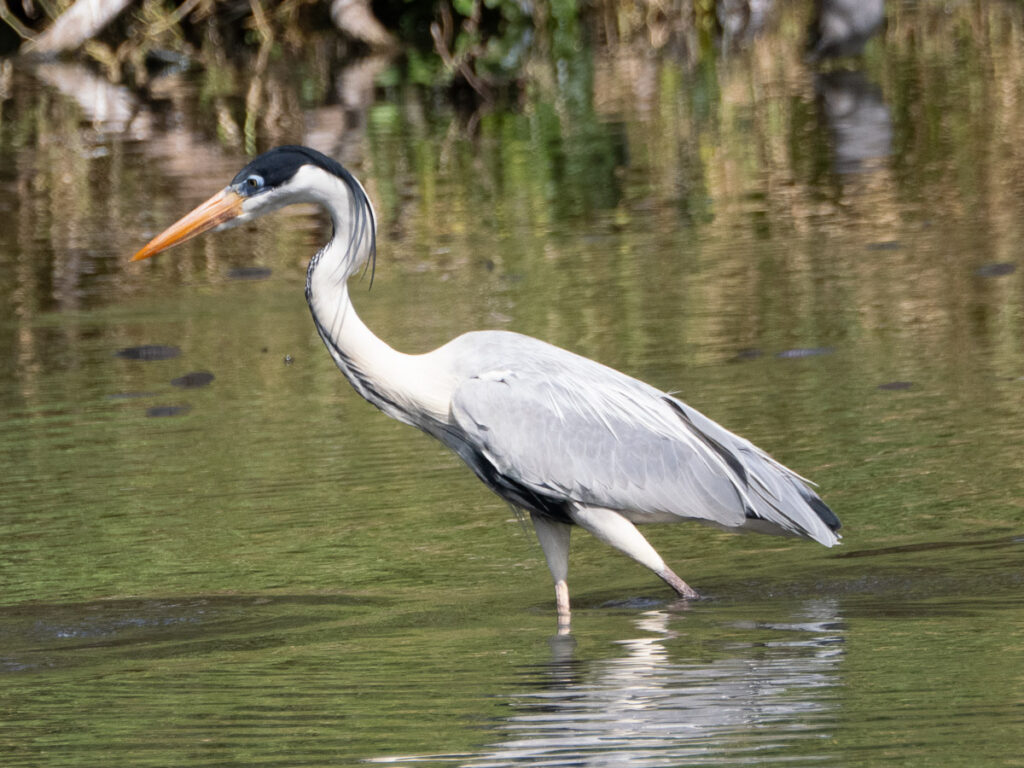
Now for the herons and egrets and I’ll take them in size order. The largest common one found in São Paulo, in this family, is the Cocoi Heron. Note the large size, grey body, white neck and black cap. You can see them regularly in both parks.
A video of the Cocoi Heron devouring a large fish can be seen here.
Great White Egret
Ardea alba
Key features: very large white egret, yellow bill, black legs.
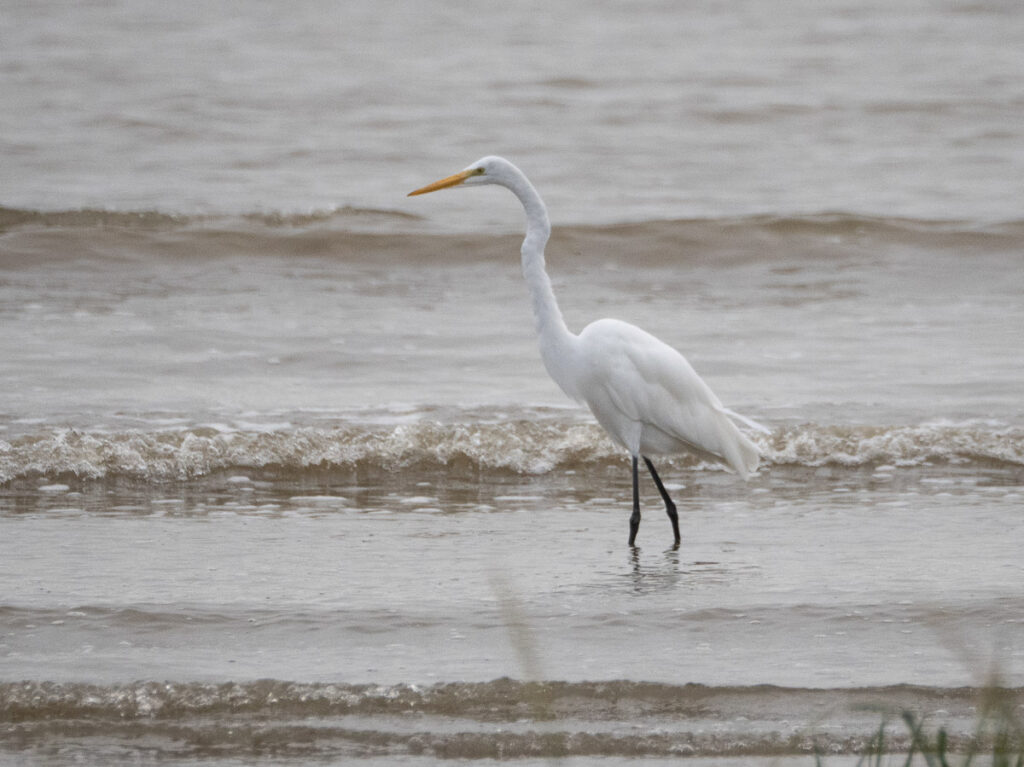
Unlike in parts of Asia where similar species occur, there is no comparable bird in São Paulo. If you see a very large, white heron/egret it’s the Great White Egret for sure. Note the yellow bill and black legs.
A video of young Great White Egrets being fed can be seen here.
Black-crowned Night Heron
Nycticorax nycticorax
Key features: stocky heron, black cap and back, red eyes in adults.
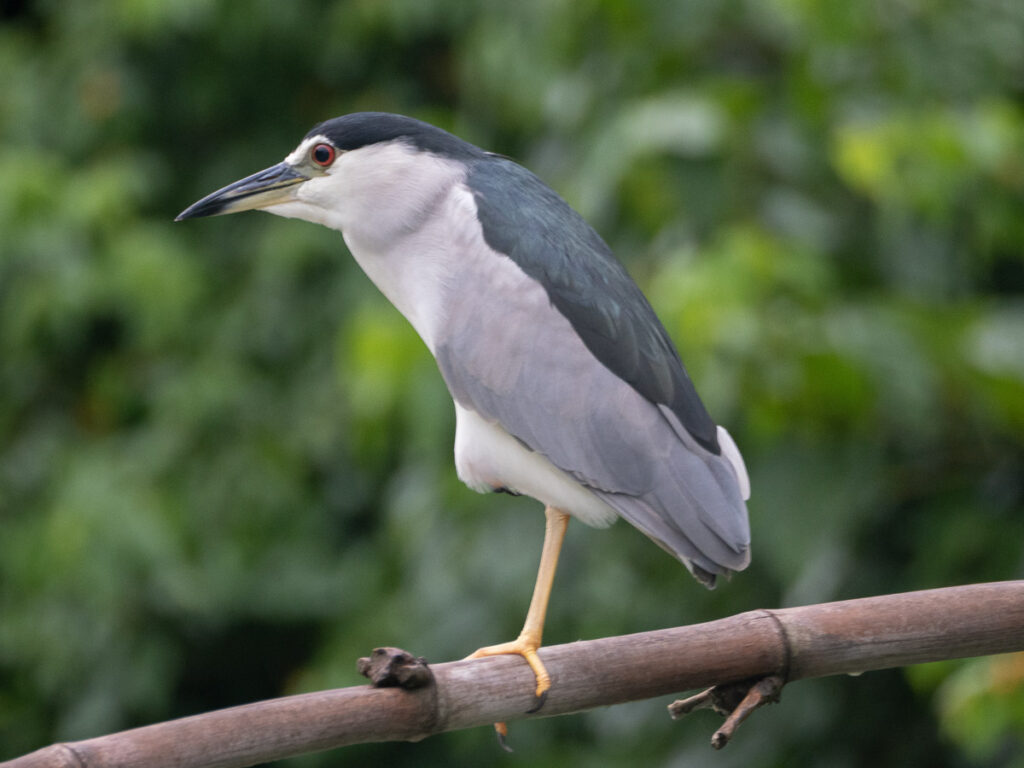
A mid-sized heron with a blue/black cap and back and, if you get close enough, red eyes. The problem with this bird is the juvenile which looks completely different – light brown with creamy streaks and a yellow eye.
Snowy Egret
Egretta thula
Key features: small white egret, black bill, yellow feet, active hunting style.
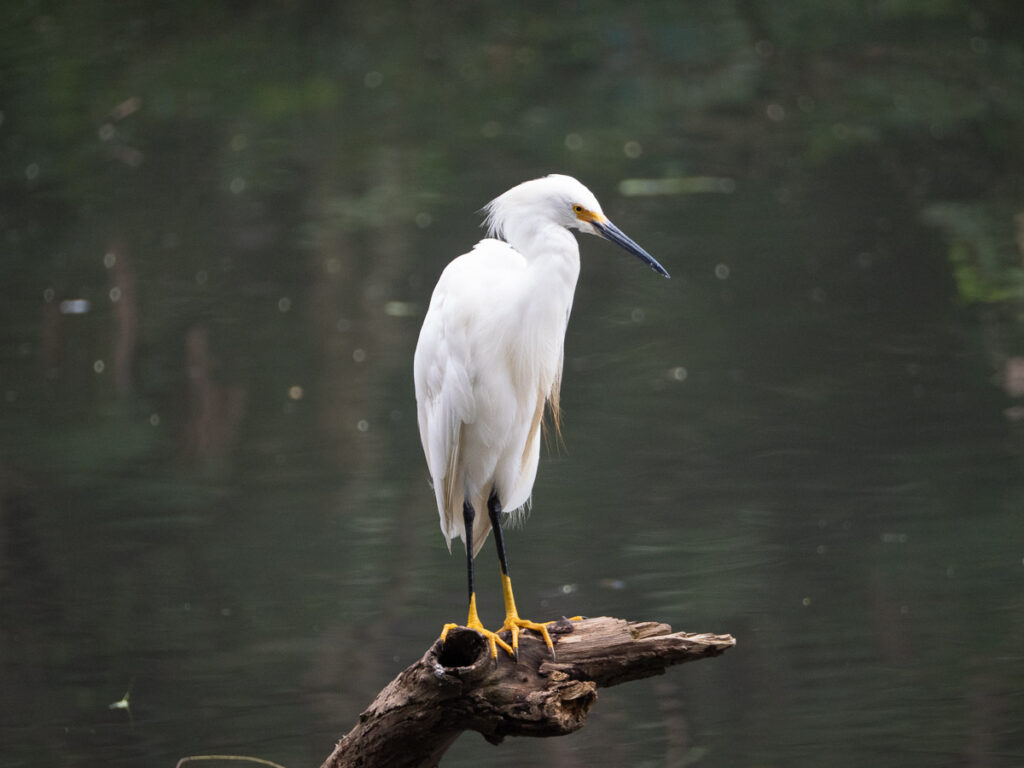
The Snowy Egret, though also white, is much smaller than the Great White Egret so should be obvious. They have black bills, black legs and surprisingly yellow feet. Also, note their sharp jerky movements while fishing. A common bird at almost any pond or lake in São Paulo.
Striated Heron
Butorides striata
Key features: small dark heron, reddish neck tones, often hunts quietly at water’s edge.
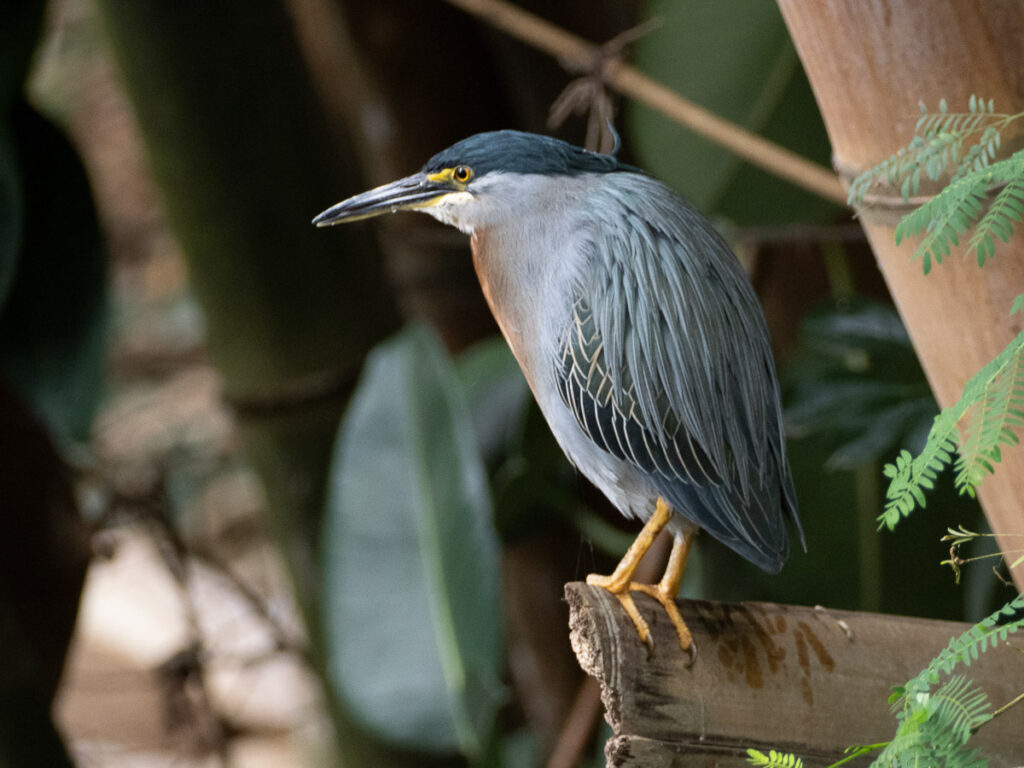
The smallest of this family that you commonly see in São Paulo is the Striated Heron. You can be forgiven for confusing it with the Black-crowned Night Heron but this bird is significantly smaller and has some reddish-brown colouring on the neck at the front which the Black-crowned Night Heron lacks.
Amazon Kingfisher
Chloroceryle amazona
Key features: large green kingfisher, white collar, often flies low over water.mmon on lakes and ponds.
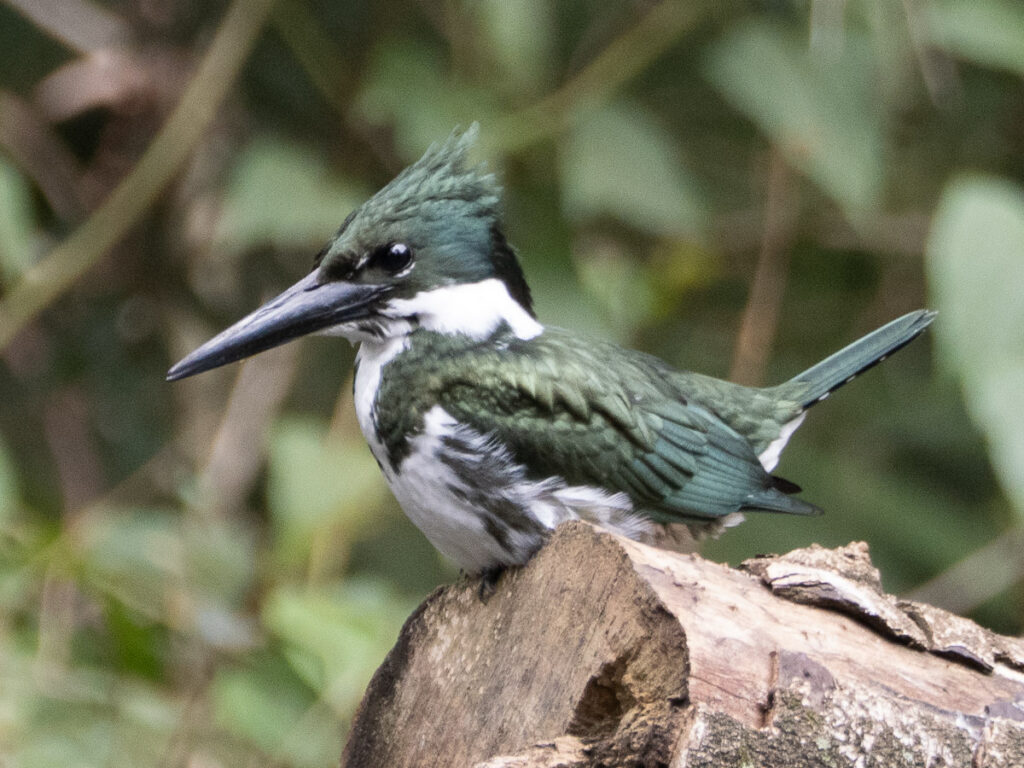
Despite its name the Amazon Kingfisher is found in Central America and down into central South America as well. They are the most common kingfisher in São Paulo. The males have a rusty brown colour on the breast which the female lacks. You often see them flying low over the water in Ibirapuera Park.
Masked Water-Tyrant
Fluvicola nengeta
Key features: black-and-white flycatcher, bold mask, often near water.
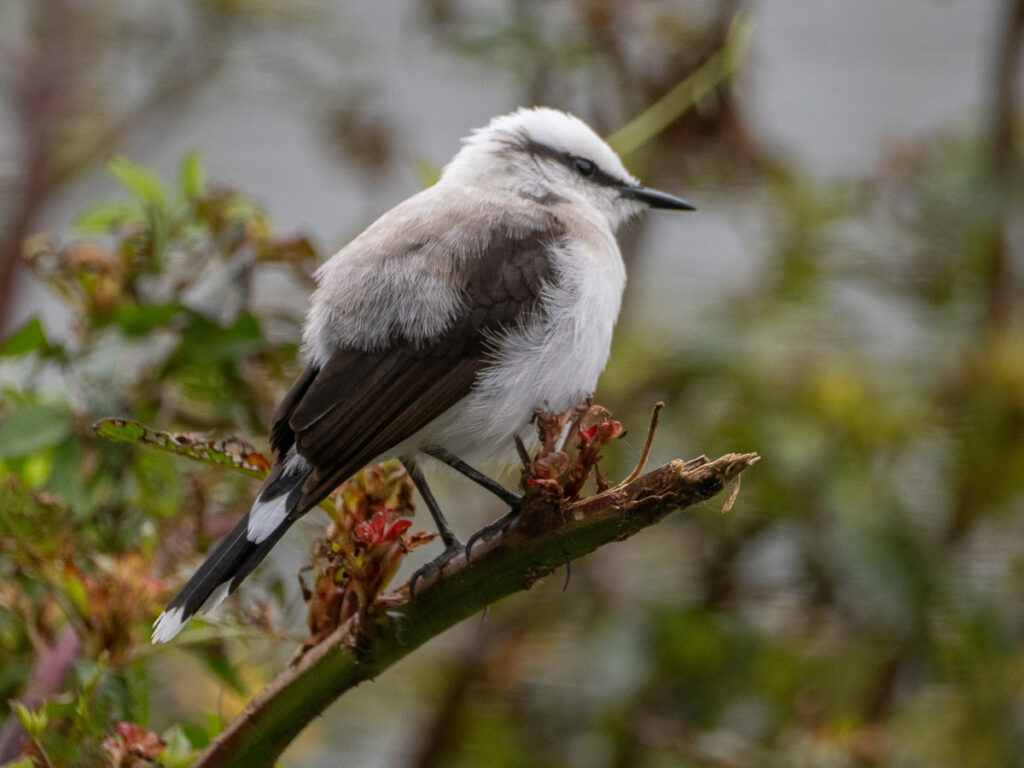
This pretty bird, although not strictly a water bird, is almost always found near the water and usually builds its nests over the water. Once you see one, watch it for a while and you may see it flashing out its tail and wings in an interesting movement. You can see this at the end of the video below.
Smooth-billed Ani
Crotophaga ani
Key features: large black cuckoo, heavy curved bill, often seen in small groups.
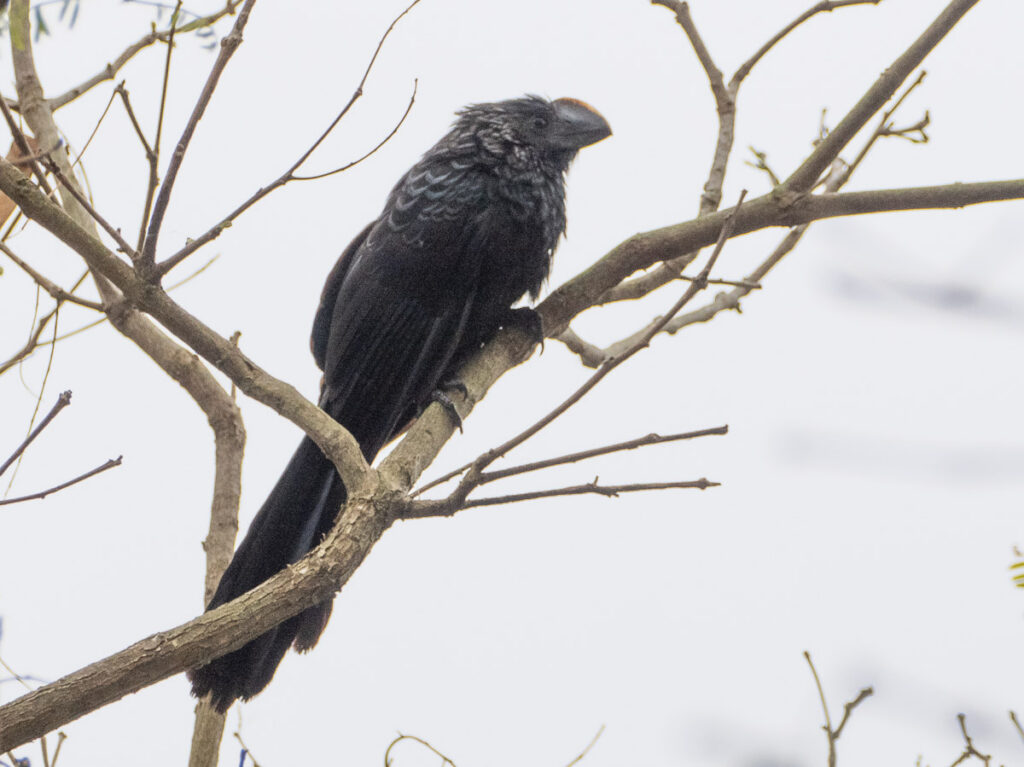
This is a strange looking bird with a seemingly crooked looking bill. They are quite large and often seen in small groups and often near water. They are part of the cuckoo family and like many cuckoos, can be seen gliding although they are quite ungainly and their movements can look awkward. Although there are other similar species of Ani, this one is the most common in São Paulo.
Common Squirrel-Cuckoo
Piaya cayana
Key features: long-tailed orange-brown cuckoo, striking red eye, glides between trees.
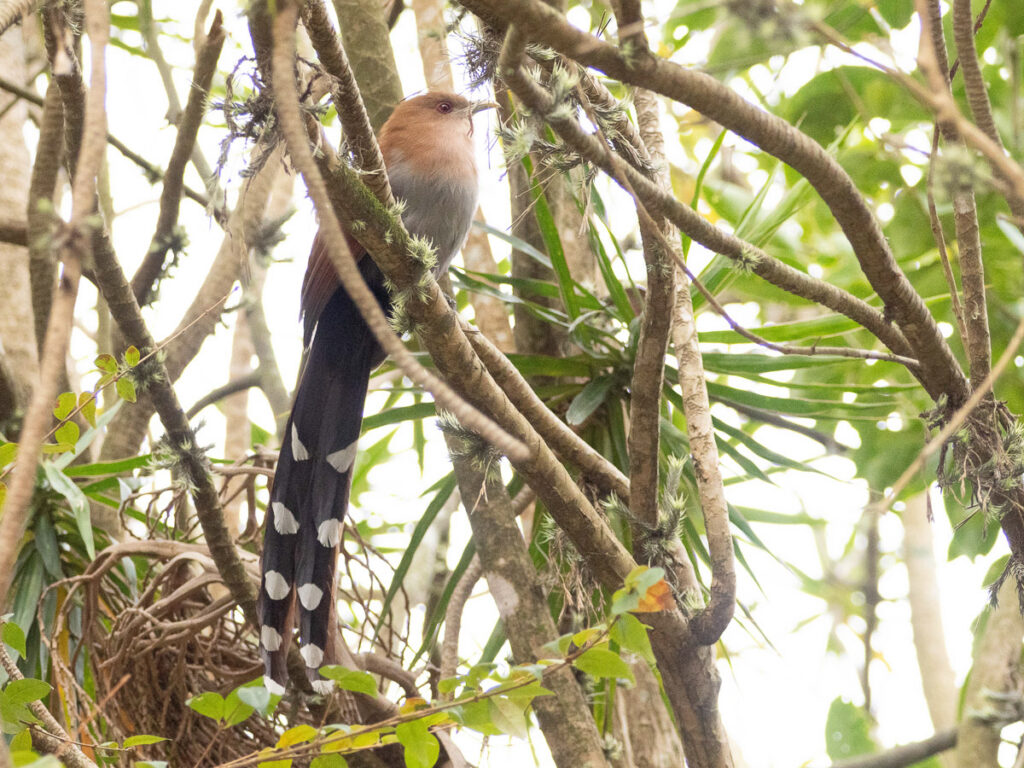
When I first arrived in São Paulo this was one of the most surprising birds for me. They are quite large with very long tails and are surprisingly common. Despite their commonality and size, they tend to hide in the branches of trees, often quite high up, so it’s not always easy to get a good view of them. A really impressive bird and underrated in my view.
Southern Lapwing
Vanellus chilensis
Key features: large plover, loud calls, often seen on lawns and open ground.
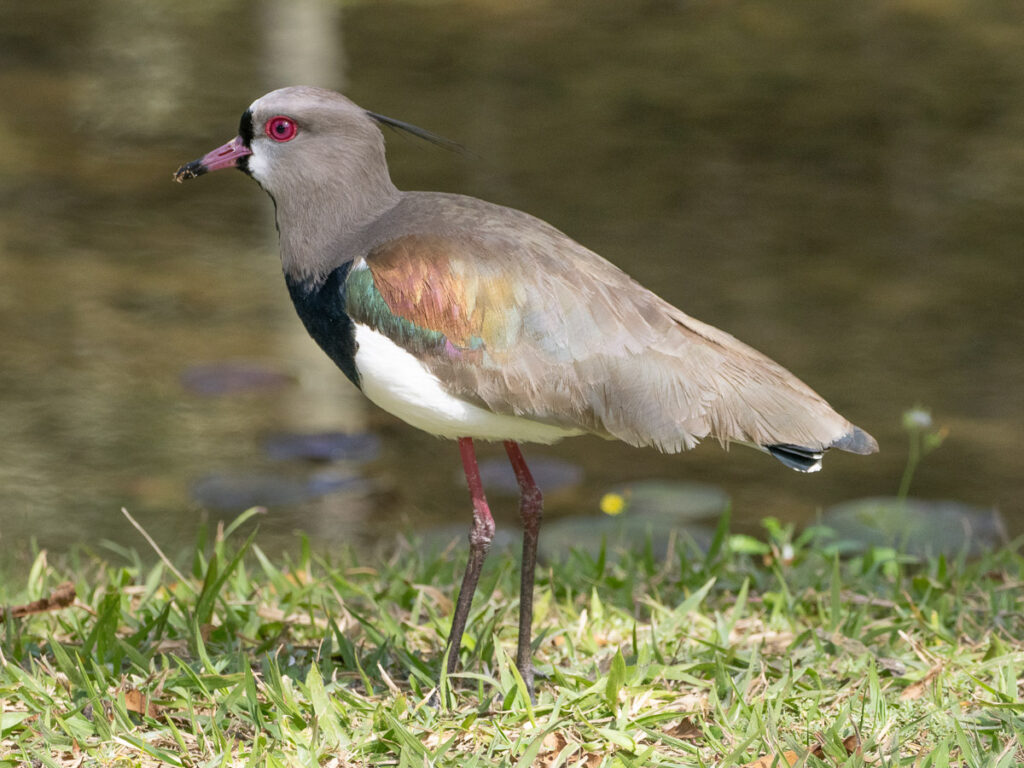
In Europe there is a Northern Lapwing which, seen in good light, is a very pretty bird. The same is true of its southern cousin. Unfortunately, commonality breeds complacency and these birds are so common (and noisy) that I’m sure they are underappreciated. If you hear one or more birds calling really loudly and maybe even dive bombing you, that’s usually a sign that there are some young birds around so look carefully on the ground to spot one.
American Black Vulture
Coragyps atratus
Key features: black vulture, pale patches on wing tips in flight, often soaring in groups.onds.
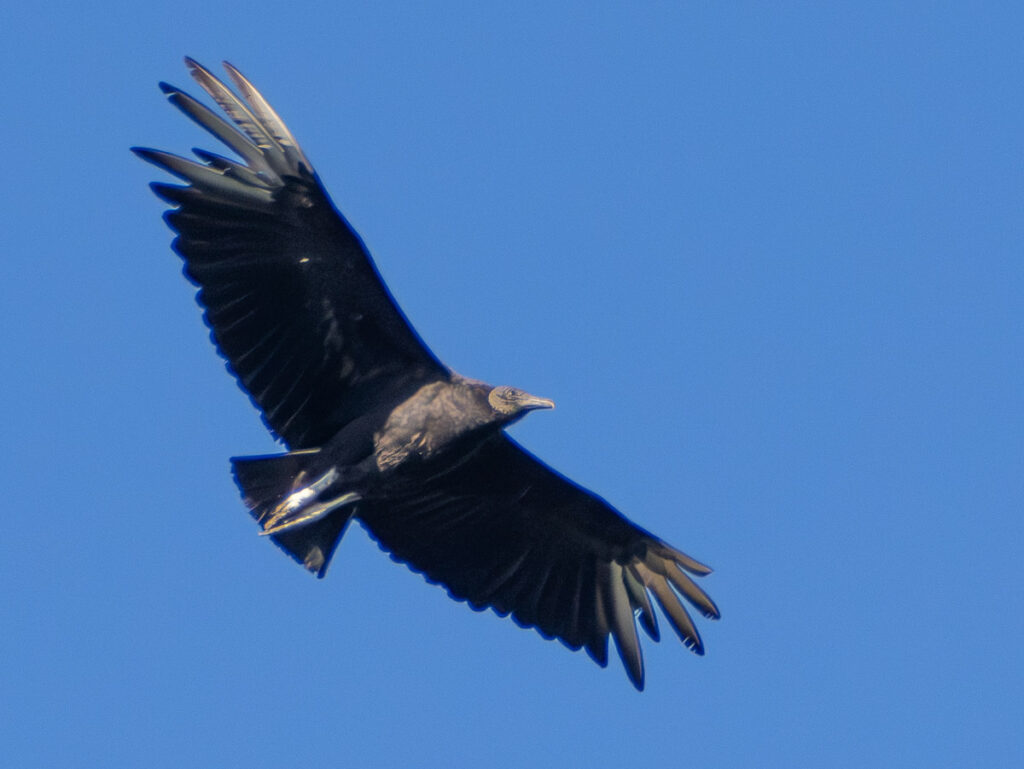
The most common vulture in much of North America and all of South America. Note the whitish / grey patches on the ends of the wings when seen in flight. Although they can often be seen on the ground, sometimes in groups picking at a dead fish for example, they are mainly seen soaring high in the sky in groups.
Red-breasted Toucan
Ramphastos dicolorus
Key features: medium-sized toucan, huge colourful bill, loud frog-like barking call.
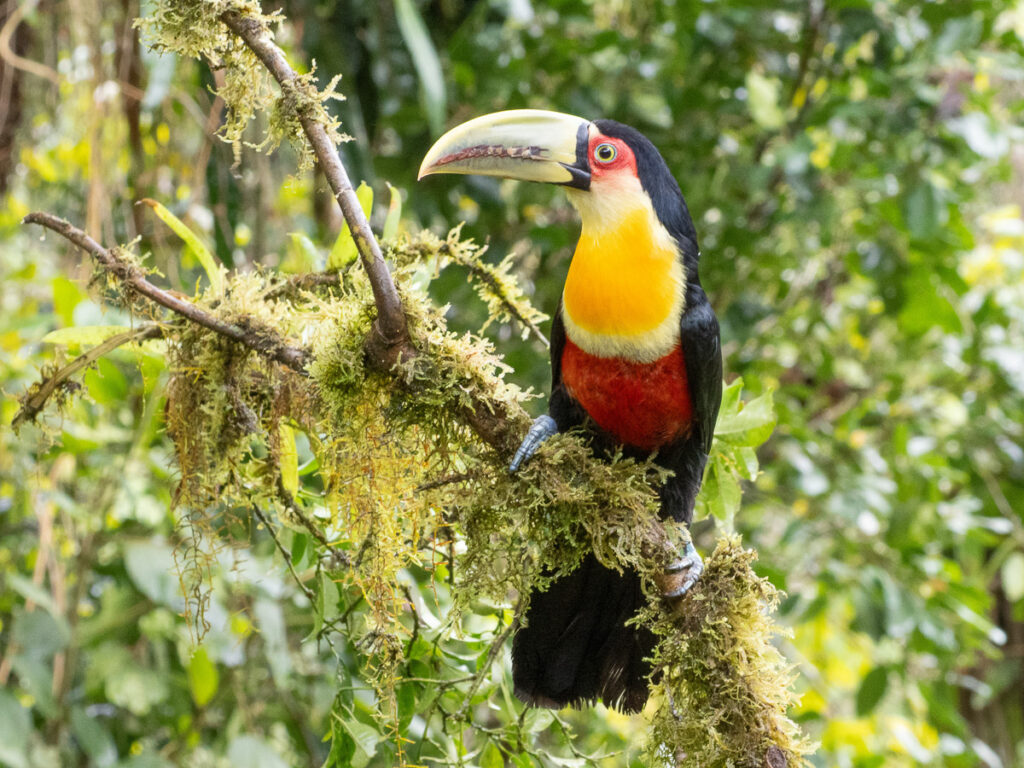
So far I have never seen a Red-breasted Toucan in Ibirapuera Park but they have definitely been seen there according to ebird. I have seen them a few times in the Botanical Garden. Listen out for their loud frog-like, barking call and then look high in the trees. They are a wonderful sight to see up close.
Lineated Woodpecker
Dryocopus lineatus
Key features: large woodpecker, striking red crest, loud calls, strong trunk-climbing behaviour.
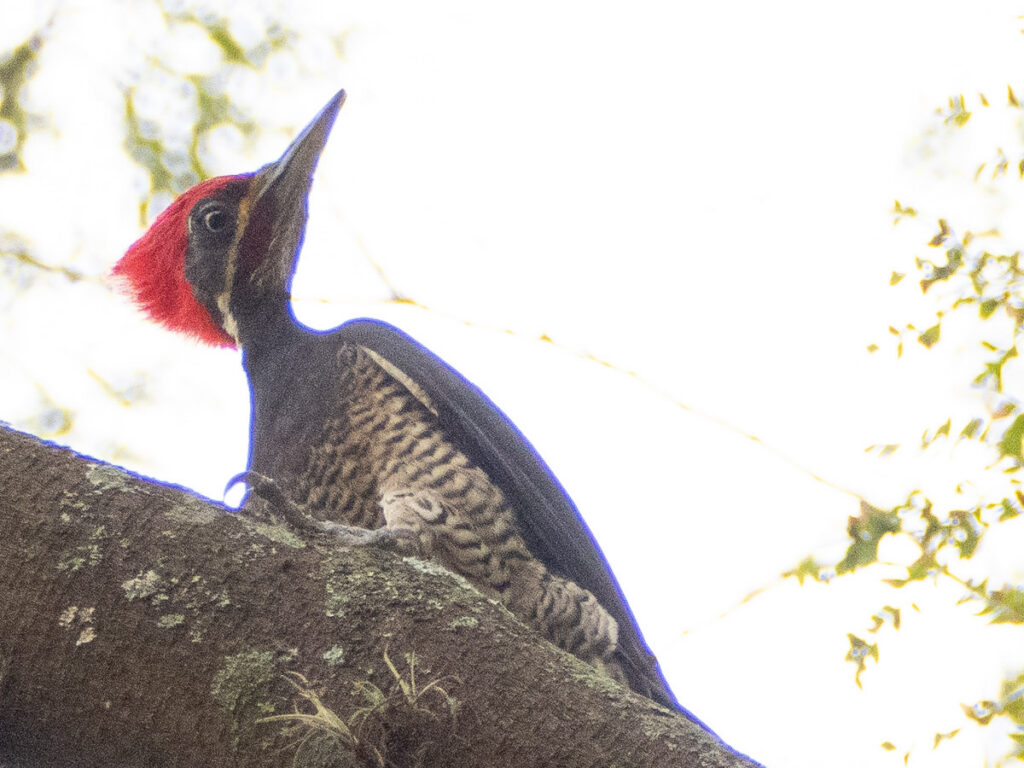
Now on to the woodpeckers. The Lineated Woodpecker is the one I have seen the least but I did hear one once from my balcony in Pinheiros so they are definitely around. Look out for that stunning red head and loud call often flying from tree to tree and climbing up the main trunk.
Blond-crested Woodpecker
Celeus flavescens
Key features: pale yellow crest, warm buff face, often seen low or on the ground.
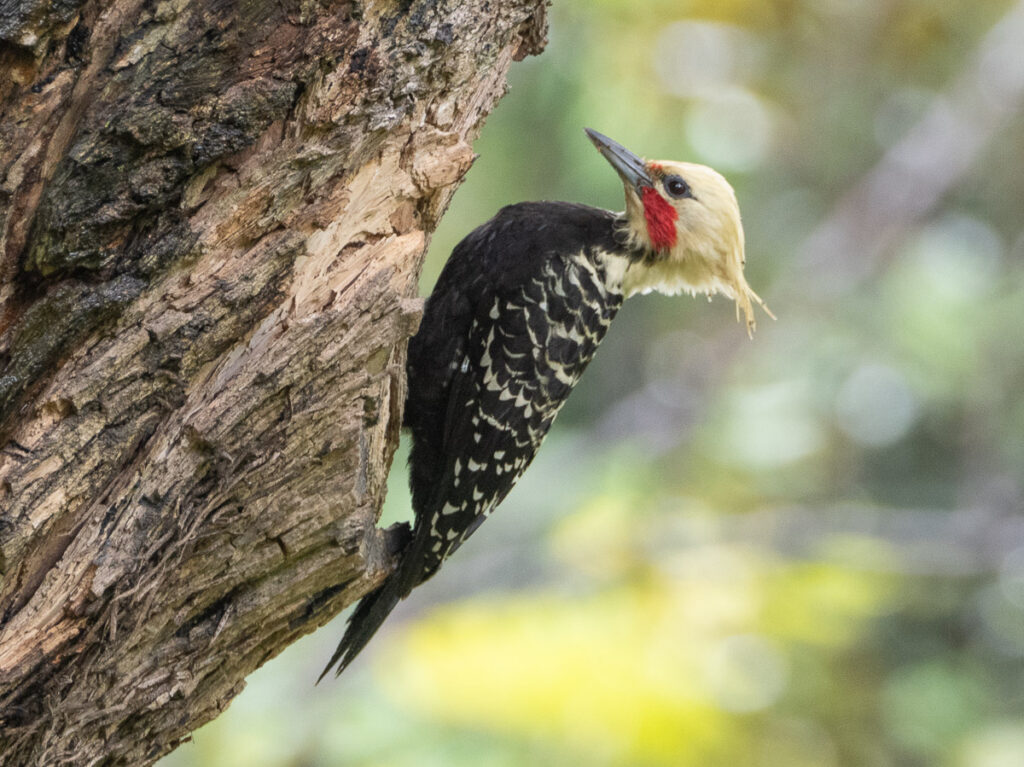
There is a fashionable clothing label in Brazil who have this bird as their logo and you often see people wearing t-shirts with this bird featured. They are surprisingly common and very pretty often seen on the ground as well as low in the trees.
A video of the Blond-crested Woodpecker can be seen here.
Green-barred Woodpecker
Colaptes melanochloros
Key features: greenish barred back, pale face, often feeds on the ground.
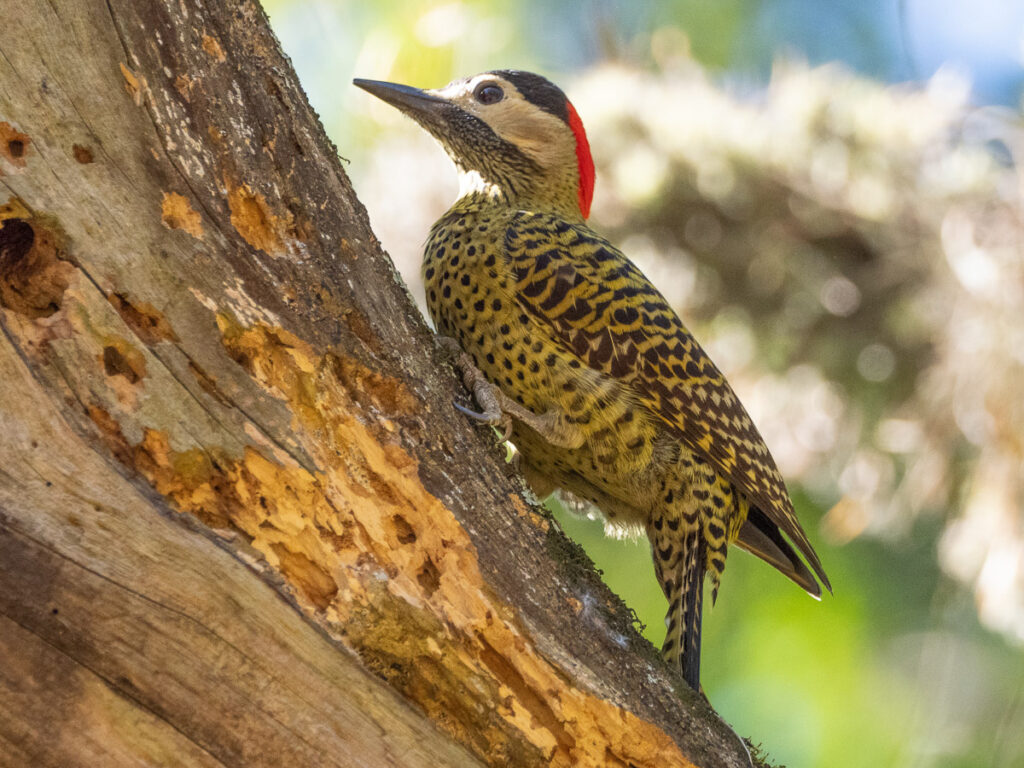
Another quite common woodpecker and even more often seen on the ground. Both the male and female are similar although the males have a red rather than black moustache. To be honest though, that can be hard to see without a good photo.
White Woodpecker
Melanerpes candidus
Key features: black-and-white woodpecker, white underparts, yellow facial skin around the eye.
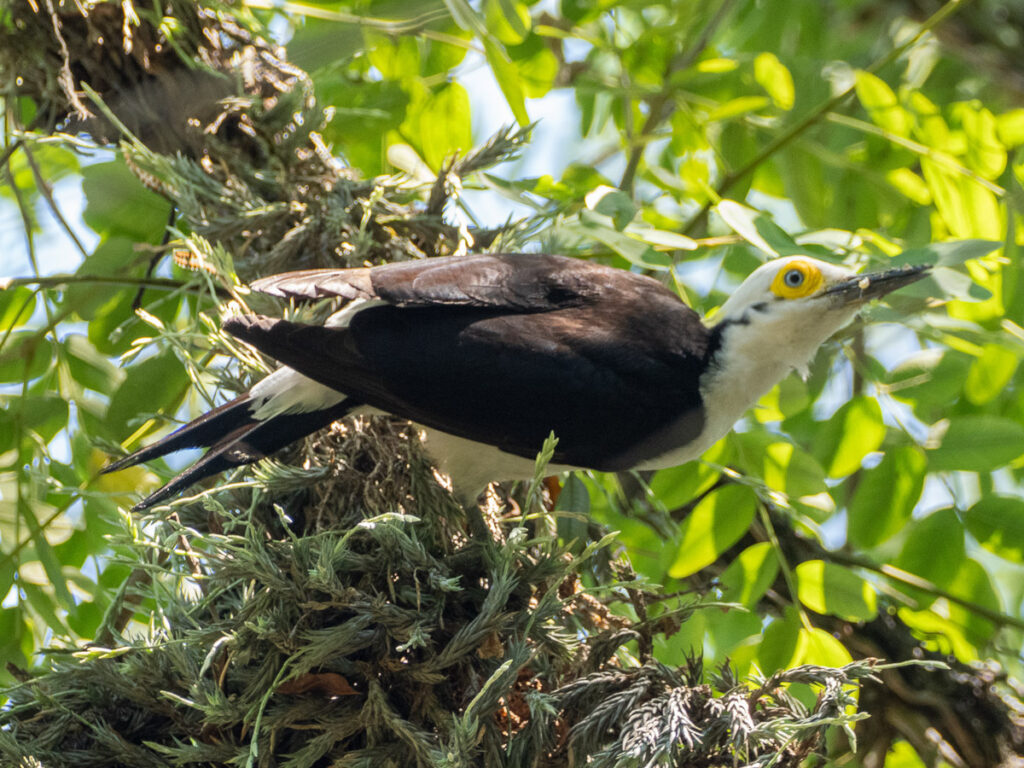
The last woodpecker in my common list is the White Woodpecker. It is very unusual for a woodpecker in that it has an all white front with black on the back and wings and yellow ‘goggles’ around its eyes. It was my first woodpecker that I saw in the Botanical Garden but I have rarely seen it there since. More recently, I have seen them in Ibirapuera Park.
Crested Caracara
Caracara plancus
Key features: large black-and-white raptor, pale neck, often seen walking on the ground.
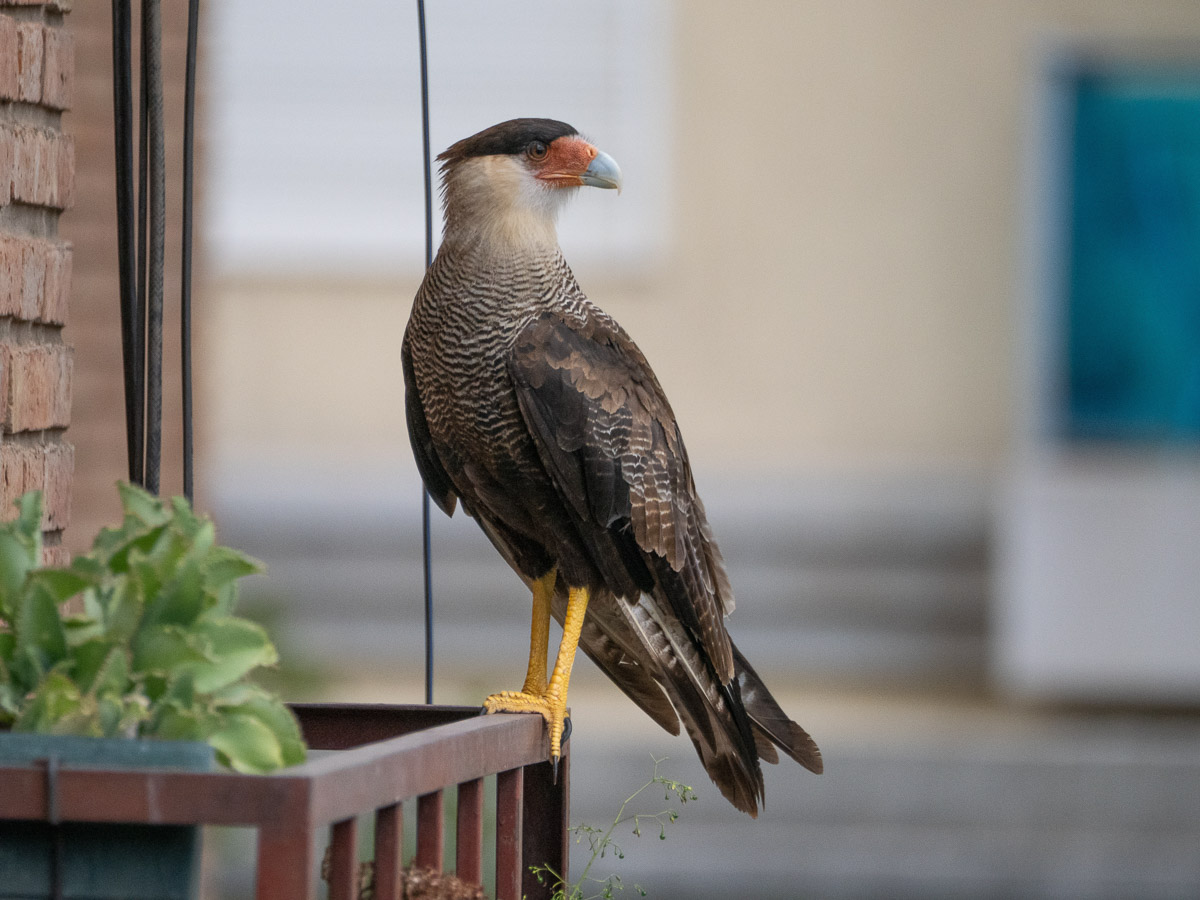
The Crested Caracara is surprisingly common and can often be seen flying in between the skyscrapers of São Paulo. It is one of the largest members of the falcon family. I have once seen a Yellow-headed Caracara in Ibirapuera Park but I won’t include it here unless I start seeing it more regularly. They can often be seen strutting on the ground looking for lizards and snakes to eat.
Aplomado Falcon
Falco femoralis
Key features: slim falcon, bold facial pattern, long banded tail, dark belly band.
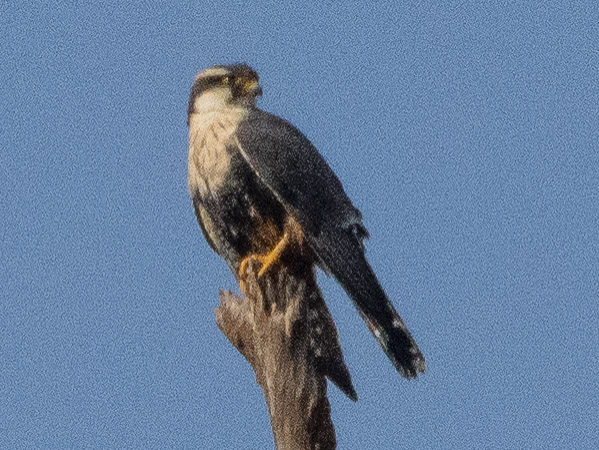
This is a classic falcon looking bird with typical black face stripes and dotted wing patterns underneath. It is by far the most common small falcon in São Paulo though with some distinctive features to watch out for including a long stripey tail and a dark band across the belly. They are often seen perched high in a tree or on a building surveying their domain.
Turquoise-fronted Amazon
Amazona aestiva
Key features: chunky green parrot, blue forehead, loud repeated calls, often in noisy flocks.

The population in São Paulo of these birds is probably at least partly made up of escapees or offspring of original escapees a few generations ago as they are common caged parrots. I have seen them nesting in Ibirapuera Park though so the population is definitely breeding. When I first heard them in the city I thought their sound was echoing off the buildings but in fact their call is often repeated by other birds nearby creating a fake echo effect. If ever you wonder about that, you’re probably hearing the Turquoise-fronted Amazon.
Maroon-bellied Parakeet
Pyrrhura frontalis
Key features: medium-sized parakeet, longer tail than Plain Parakeet, more colourful plumage, sharper call.
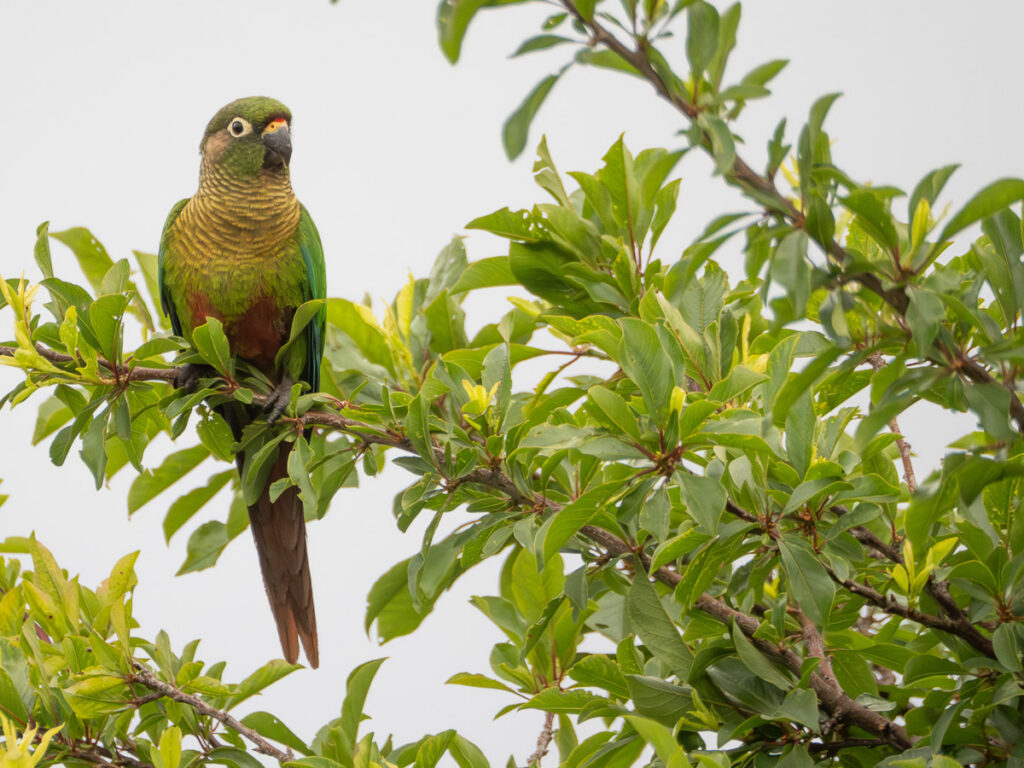
While not as common as the Plain Parakeet by any means the Maroon-bellied Parakeet can often be seen in São Paulo. You’re most likely to spot them when one of their favourite trees starts fruiting. They are larger than the Plain Parakeet and more colourful and make a slightly different noise. Once you get used to the Plain Parakeet call, you might see a Maroon-bellied flying overhead and simply think, wait-a-minute, that doesn’t sound like a Plain Parakeet.
A video of the Maroon-bellied Parakeet can be seen here.
Red-shouldered Macaw
Diopsittaca nobilis
Key features: small macaw, long pointed tail, loud calls, often flies overhead in small groups.
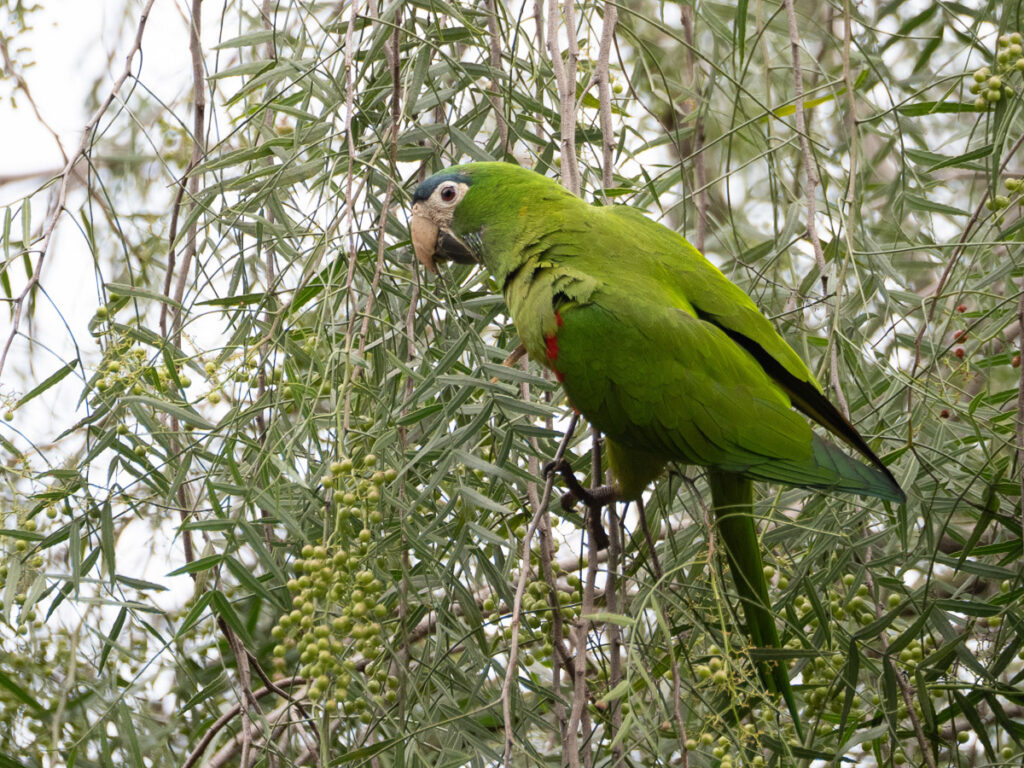
The largest (and loudest) of the common parrot species in São Paulo although small by Macaw standards the Red-shouldered Macaw can often be seen flying overhead in small groups. Again, to get a close up view you really want to see them descending on a fruiting tree but you can definitely also see them perched on the ledges of buildings from time to time.
A video of the Red-shouldered Macaw can be seen here.
Cattle Tyrant
Machetornis rixosa
Key features: yellow-bellied flycatcher, often on the ground, frequently follows grazing animals.
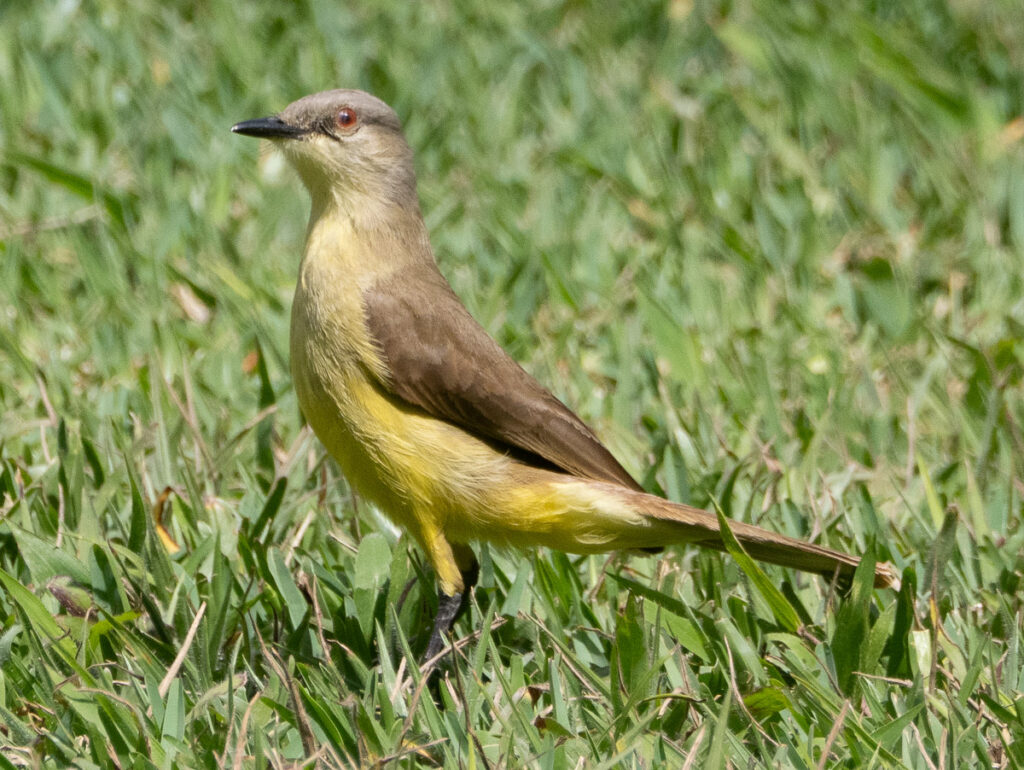
Now on to a frustratingly similar group of birds that actually starts with the Great Kiskadee listed first. The Cattle Tyrant is almost identical to the Tropical Kingbird so you really need to look for the behaviour to identify it. The Cattle Tyrant likes to hunt for insects on the ground and will often follow grazing animals (hence the name). The Tropical Kingbird by contrast is a more aerial bird often seen perched high on a tree.
A video of the Cattle Tyrant can be seen here.
Tropical Kingbird
Tyrannus melancholicus
Key features: yellow-bellied flycatcher, upright posture, aerial sallies, usually perched high.
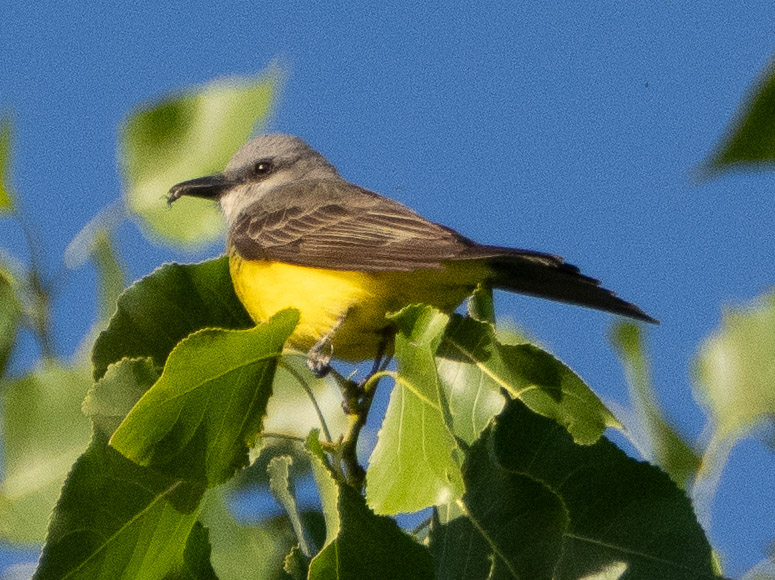
See above. Just like the Cattle Tyrant but more brightly coloured and rarely seen walking on the ground. One of these birds catching flies on the wing is most likely to be the Tropical Kingbird.
Boat-billed Flycatcher
Megarynchus pitangua
Key features: kiskadee-like flycatcher, oversized broad bill, distinctive call.
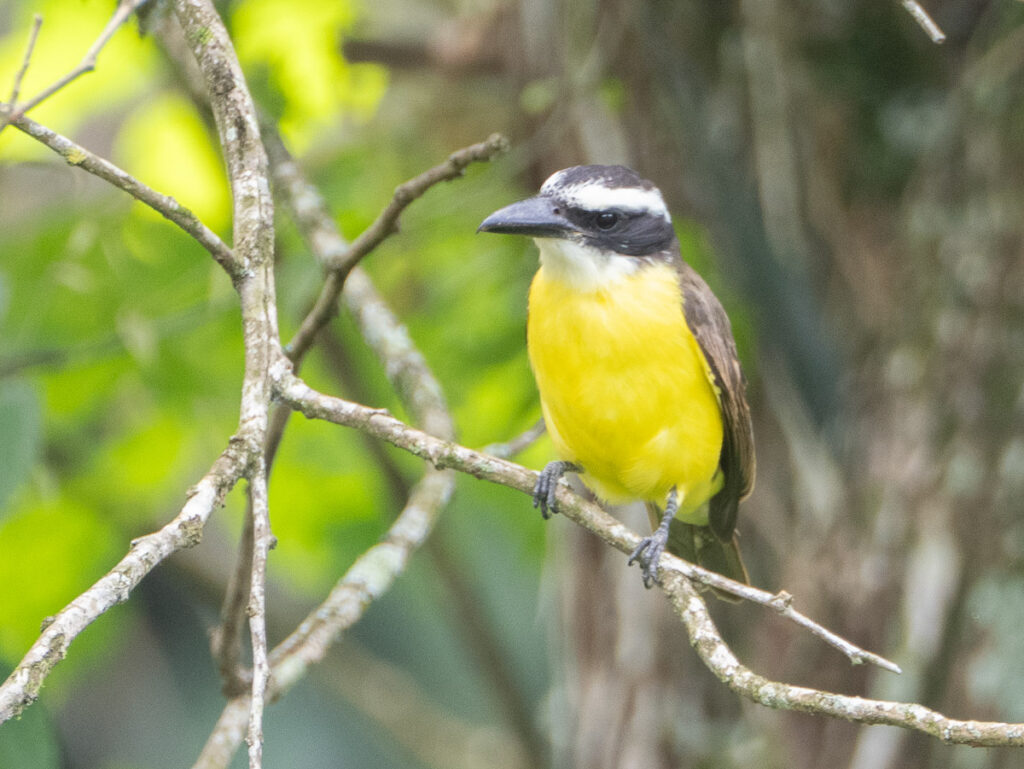
The Boat-billed Flycatcher is frustratingly similar to the Great Kiskadee. The most important difference is the call which is completely different. I often turn on the Merlin App when seeing this family of birds to highlight if a Boat-billed Flycatcher is near. Visually the main difference is the bill which is explained in my Great Kiskadee video but you need to be looking at the bird in profile (or from above) to really be sure.
Social Flycatcher
Myiozetetes similis
Key features: small kiskadee-like flycatcher, broad dark mask, squarer shape, voice important.
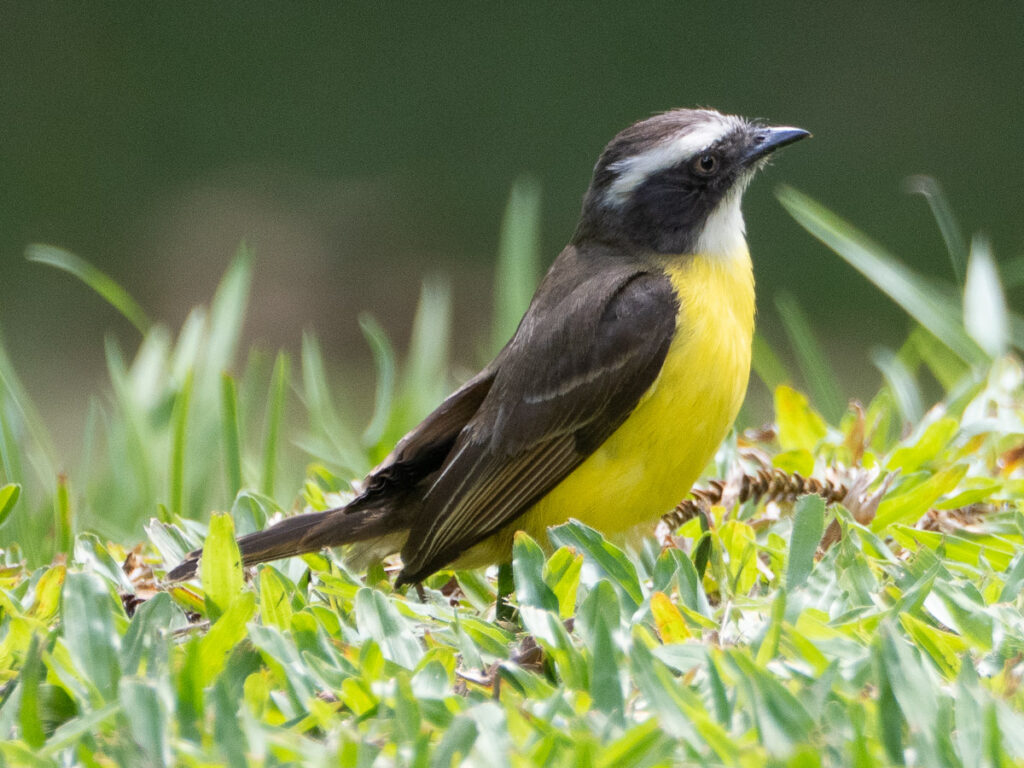
The Social Flycatcher is similar looking again so voice is important but I find it has a larger mask than the other birds in this group and sits more squarely. Learn the calls first and you’ll start to notice the visual differences afterwards.
Streaked Flycatcher
Myiodynastes maculatus
Key features: large streaked flycatcher, pale eyebrow, often high in the canopy.
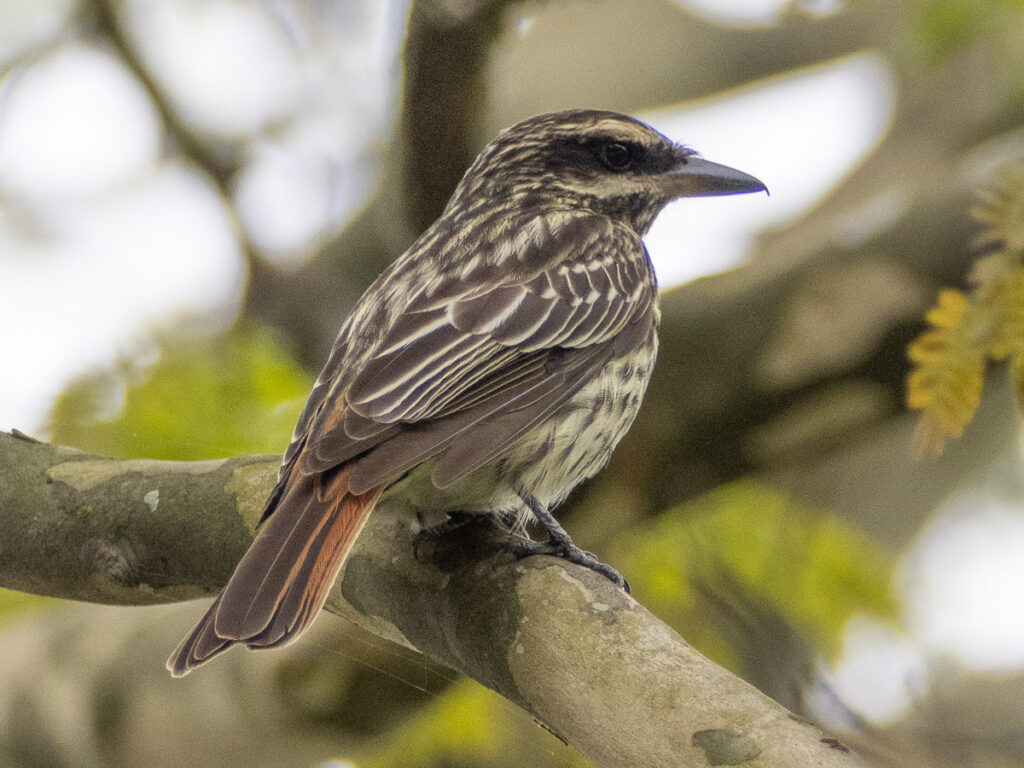
Same family but this time visually very different. As they often are found higher up in the canopy you might hear one first before seeing it but once you get a view, their creamy stripes on a brown body will usually give them away. There are some similar looking birds but so far I have only seen the Streaked Flycatcher in São Paulo so you’re probably on safe ground with the identification.
Rufous Hornero
Furnarius rufus
Key features: plain rufous-brown bird, often walks on the ground, famous mud “oven” nest.
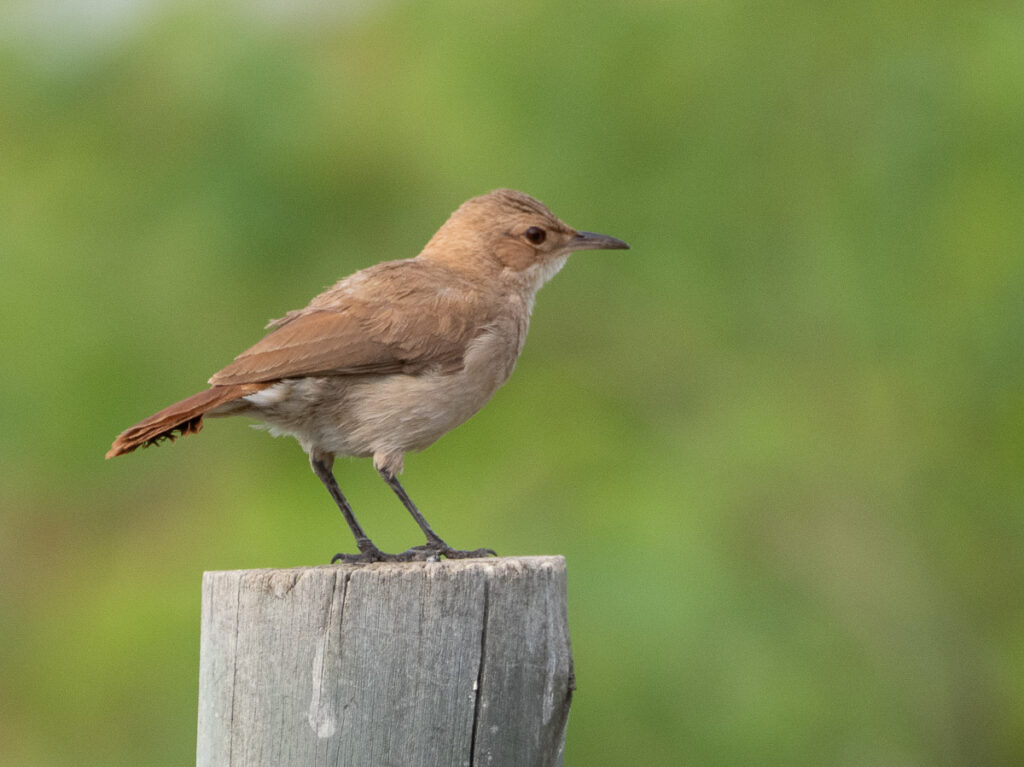
This is a fairly non-descript bird which you will see, very often strutting along on the ground. They are part of the ovenbird family which all make nests from mud which then dries to form a very special structure. The nest has a corridor which then curls around to where the actual nest sits. The reason for the curve is to prevent long beaked birds (especially the Toco Toucan) from being able to reach the nest. The toucan beaks can’t go around corners!
Rufous-browed Peppershrike
Cyclarhis gujanensis
Key features: chunky greenish songbird, strong voice, often heard far more than seen.
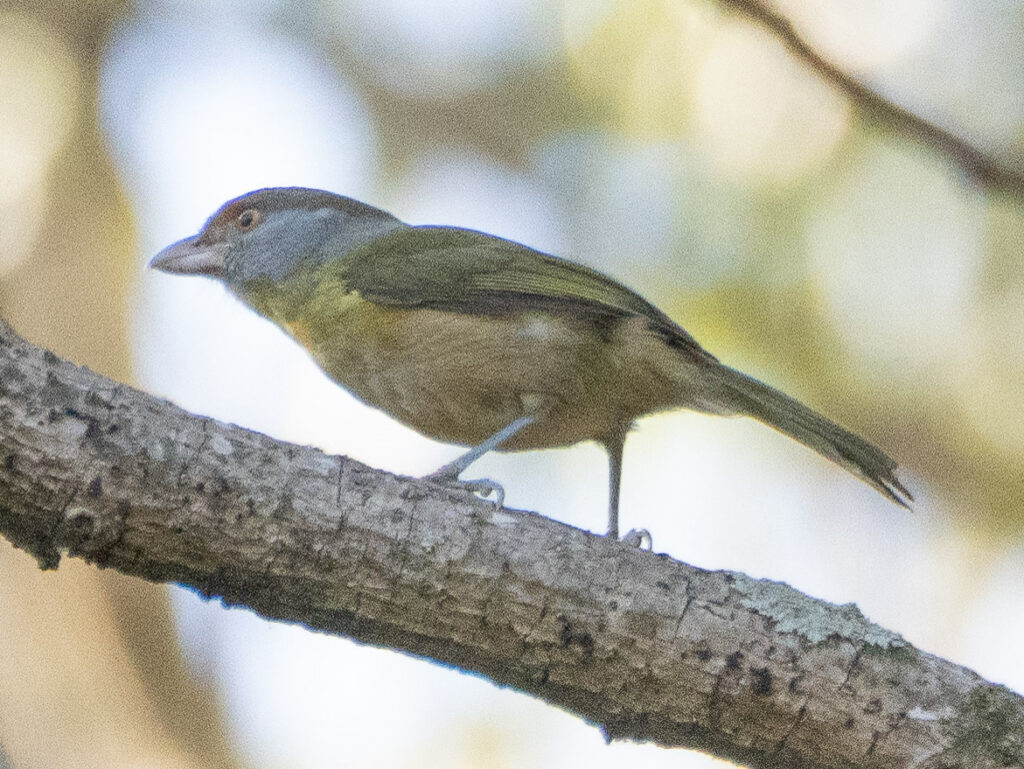
This is a challenging bird which you are in fact unlikely to actually see despite how common they are. If you use the Merlin app in wooded areas you are very likely to see this bird pop-up in the list. Be patient and you might actually see one!
Plush-crested Jay
Cyanocorax chrysops
Key features: large blue-and-black jay, prominent crest, bold and inquisitive behaviour.
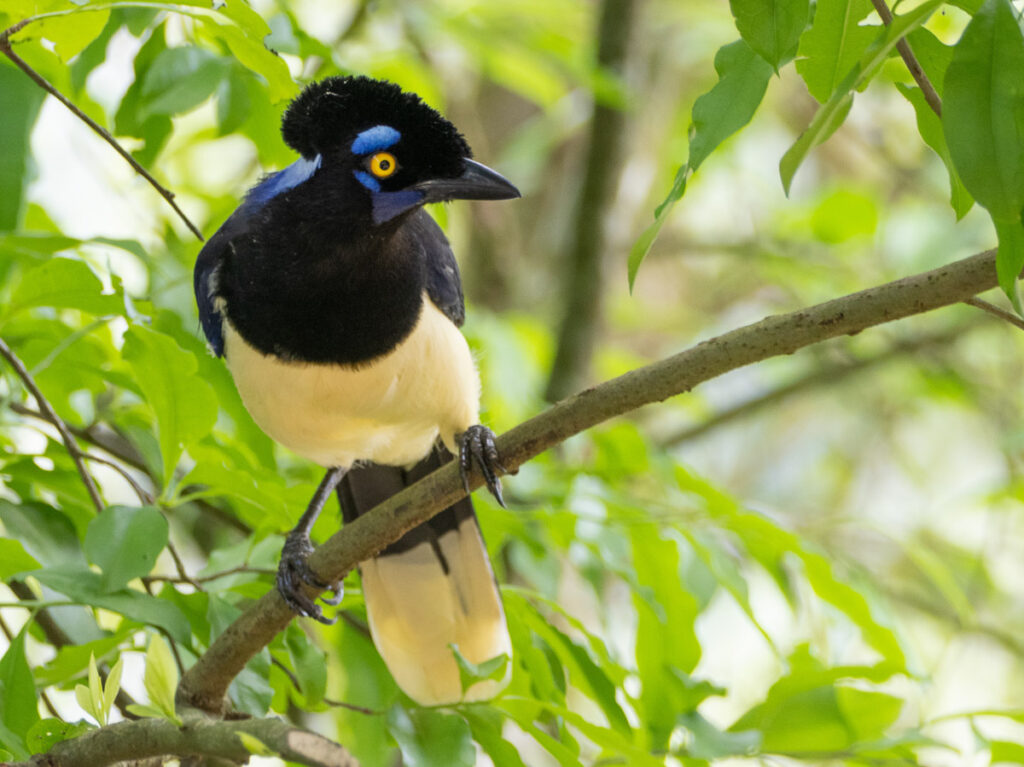
This is an absolutely delightful bird. A good size, great colouring, and a memorable call. In my experience they are quite inquisitive and so you can often get quite close to them. I have yet to see one in Ibirapuera Park but see them regularly in the São Paulo botanical garden. If you go to the Iguazu Falls they are so common there that you can feed them from your hand.
Blue-and-white Swallow
Pygochelidon cyanoleuca
Key features: small blue-backed swallow, white underparts, often low over open areas.
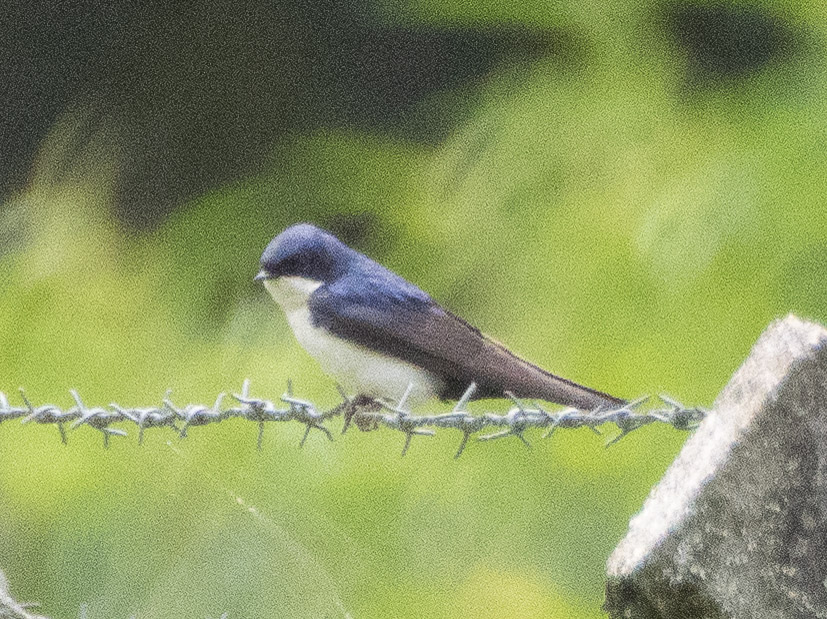
There are a few swallows and swifts to be seen in São Paulo but the Blue and White Swallow is by far the most common. Although I find their call difficult to distinguish, it will often appear in the Merlin app to help with the identification. They can also sometimes be seen on the ground gathering nest material.
Southern House Wren
Troglodytes musculus
Key features: small brown wren, cocked tail, loud energetic song.
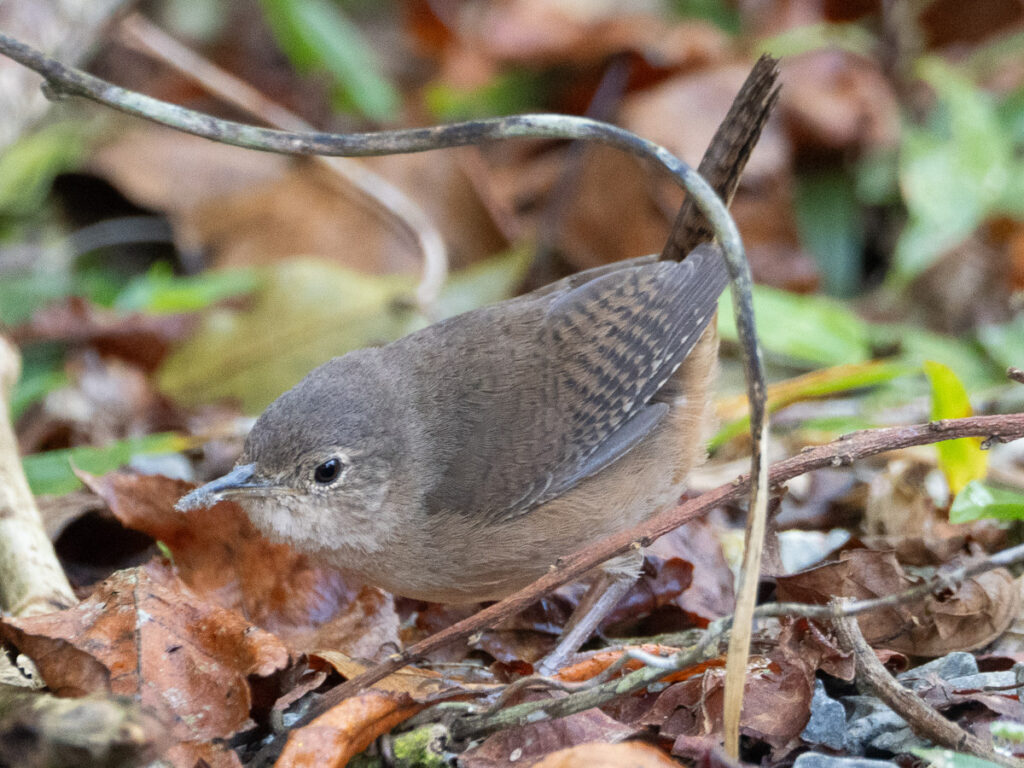
The name of this small bird is misleading. Although you are very likely to find them in your garden, they are equally common just about everywhere else. As a small bird they aren’t immediately obvious but once you get the idea of their call you start seeing them everywhere.
Chalk-browed Mockingbird
Mimus saturninus
Key features: long-tailed grey bird, pale eyebrow, often tame and conspicuous.
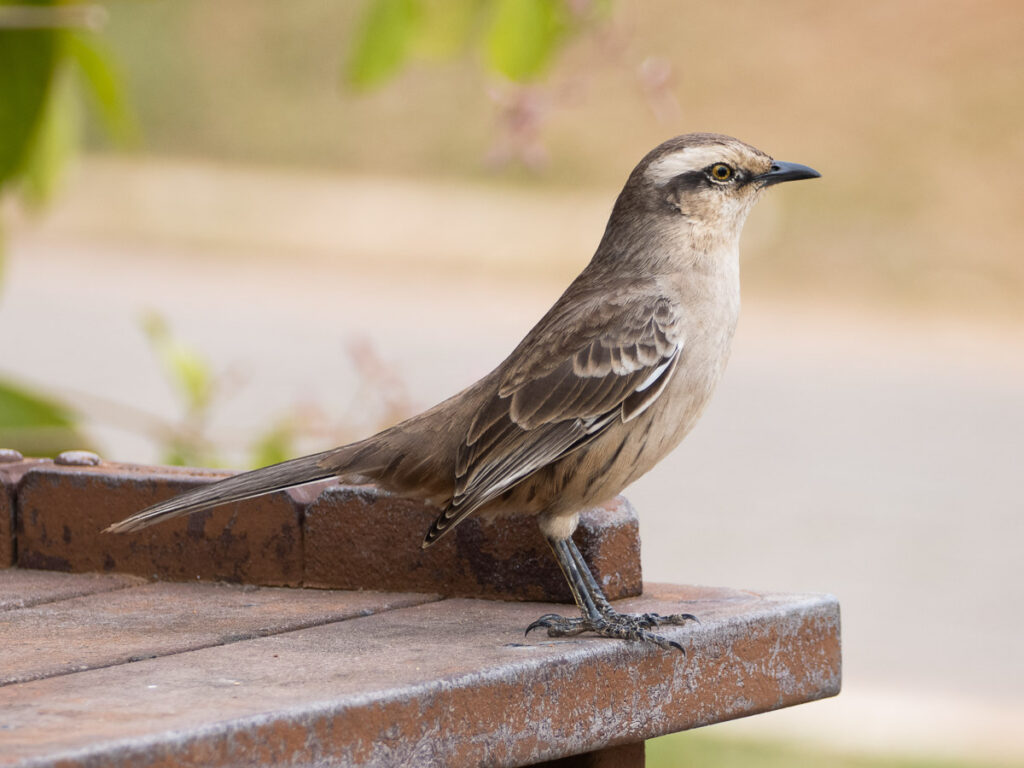
This is the ‘go to’ Mockingbird of São Paulo. I haven’t mentioned Villas Lobos park yet, but I recall that I see them most frequently in that park. They can be quite tame so you can often get quite close to them. Look out for the long tail and chalky eye brow for the identification.
Pale-breasted Thrush
Turdus leucomelas
Key features: plain thrush, pale underparts, lovely song, fairly drab appearance.
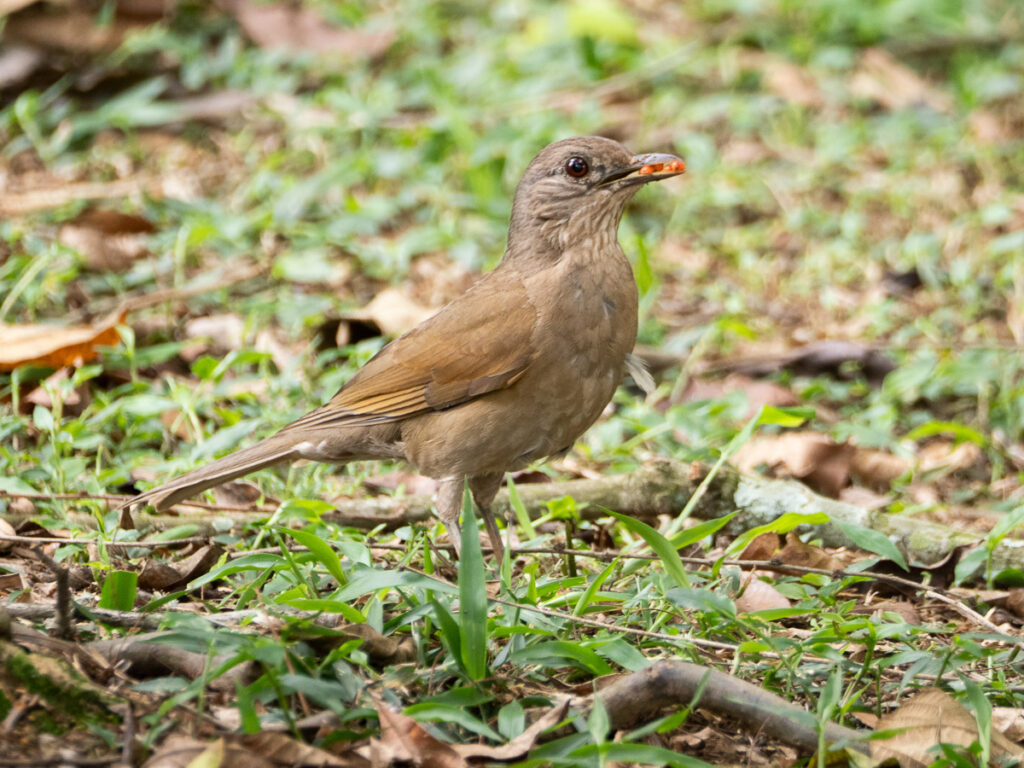
Along with the Rufous-bellied Thrush seen near the top of my list, there are two other thrushes to look out for. The next most common is the Pale-breasted Thrush. It is quite a drab bird to look at but has a lovely song. It can be confused with the next bird in the list but is slightly larger.
Creamy-bellied Thrush
Turdus amaurochalinus
Key features: pale thrush, yellow bill, subtle dark eye markings, less common than Pale-breasted.
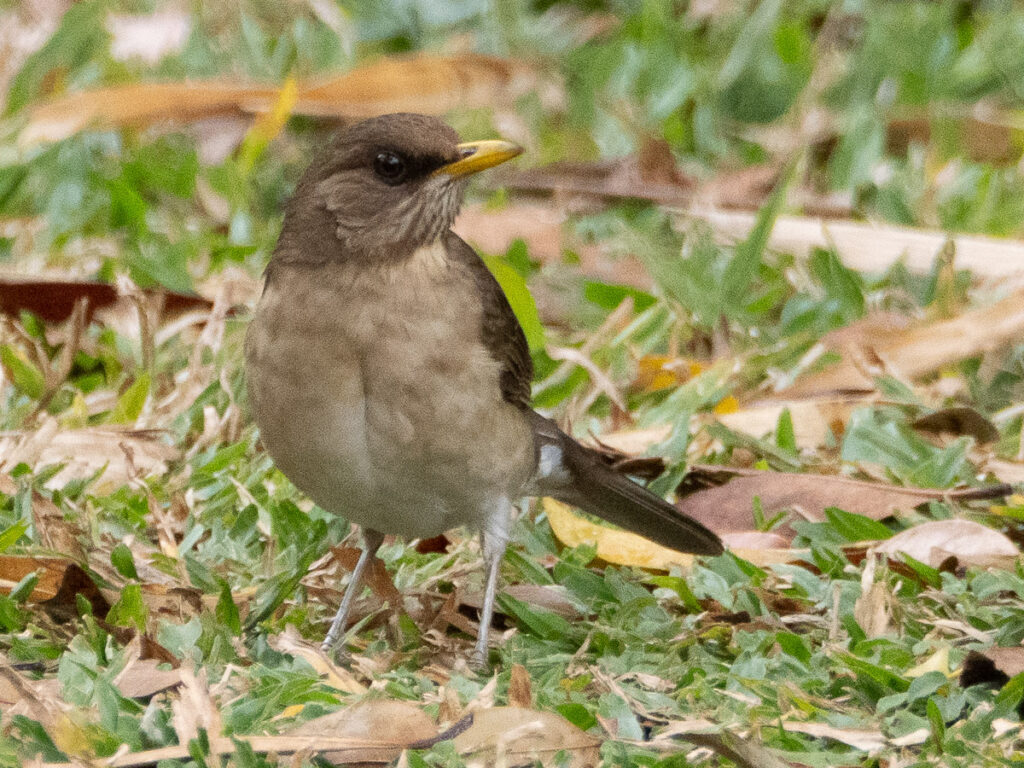
The Creamy-bellied Thrush is the least common of the three common thrushes and the first few times you see it you might easily mistake it for the Pale-breasted Thrush. The key things to look for are the subtle dark markings around the eye and the yellow beak.
Rufous-collared Sparrow
Zonotrichia capensis
Key features: sparrow-like bird, rufous neck collar, grey-and-black striped head.
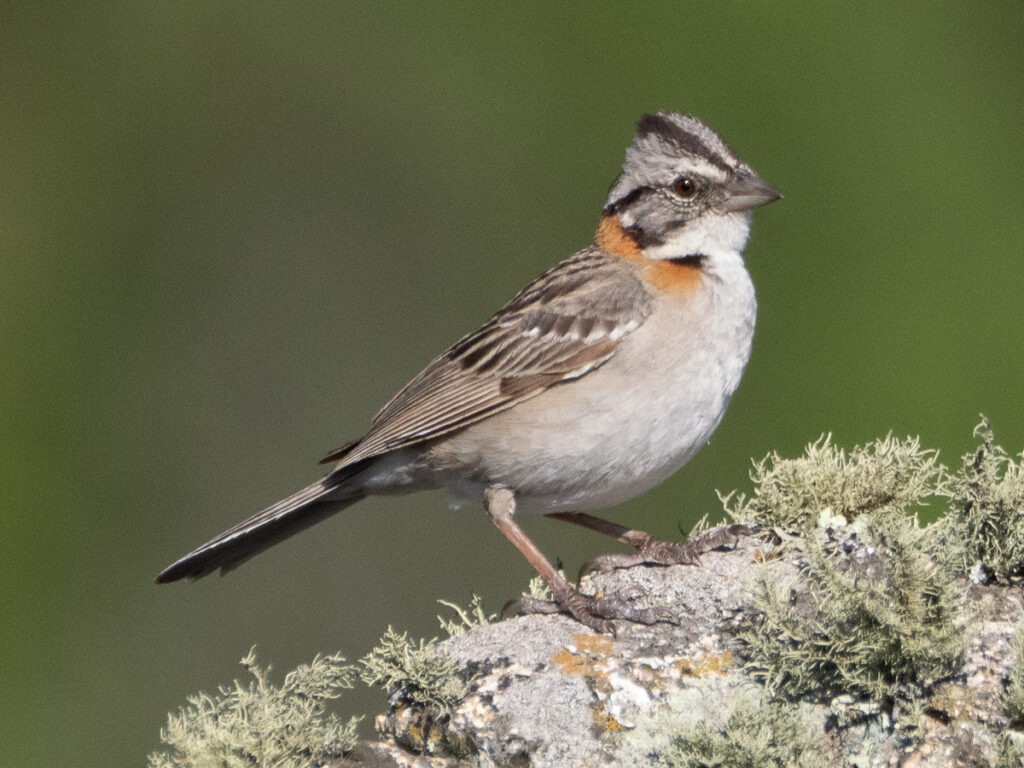
Everywhere seems to have a common sparrow and so far the Rufous-collared Sparrow fits that description for all the places I have visited in South America so far. That being said, it is not that common in either of my two main parks in São Paulo. The key to look for is a rusty brown collar that is pretty visible on both sexes and the dark grey stripes on the head.
Red-rumped Cacique
Cacicus haemorrhous
Key features: black icterid, bright red rump mostly seen in flight, hanging nest.
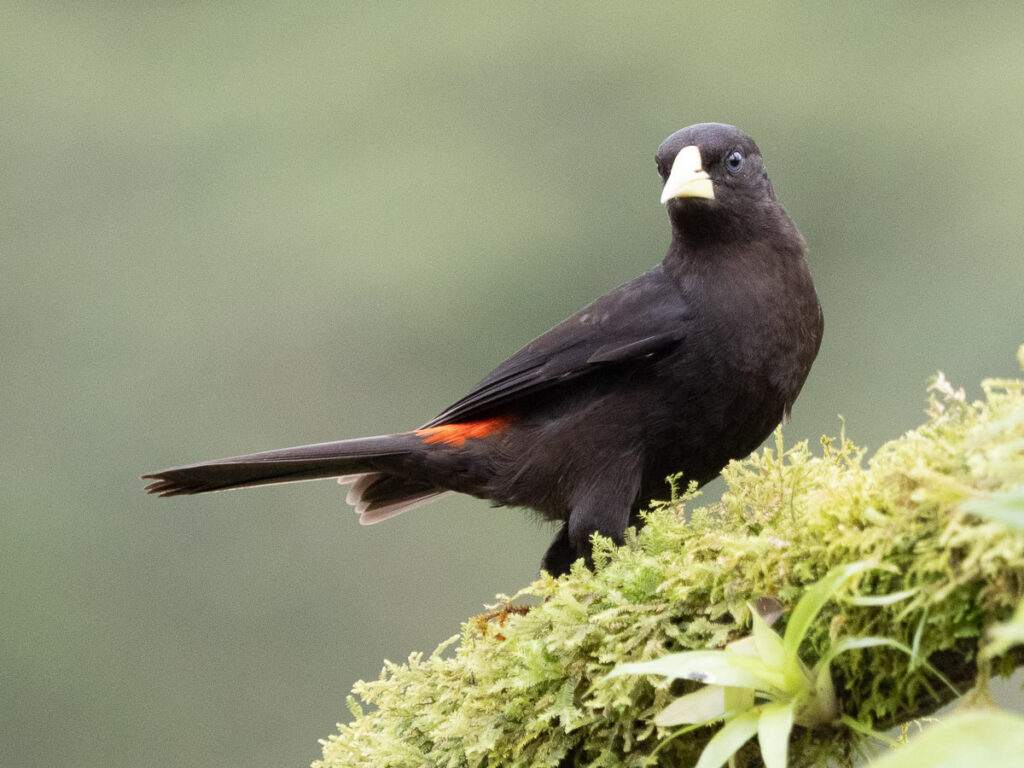
The Red-rumped Cacique is often first discovered in the breeding season when they make their long, hanging down nests that survive long after they have finished with the young. It is possible to sometimes see a colony of these birds with a large number of nests but the far pond in the São Paulo Botanical Garden has a solitary nest hanging there which is easy to spot. The red rump of the bird is mainly only visible in flight but can sometimes be seen when the bird is fussing with the nest.
Shiny Cowbird
Molothrus bonariensis
Key features: glossy dark plumage, compact icterid shape, often gleams in good light.
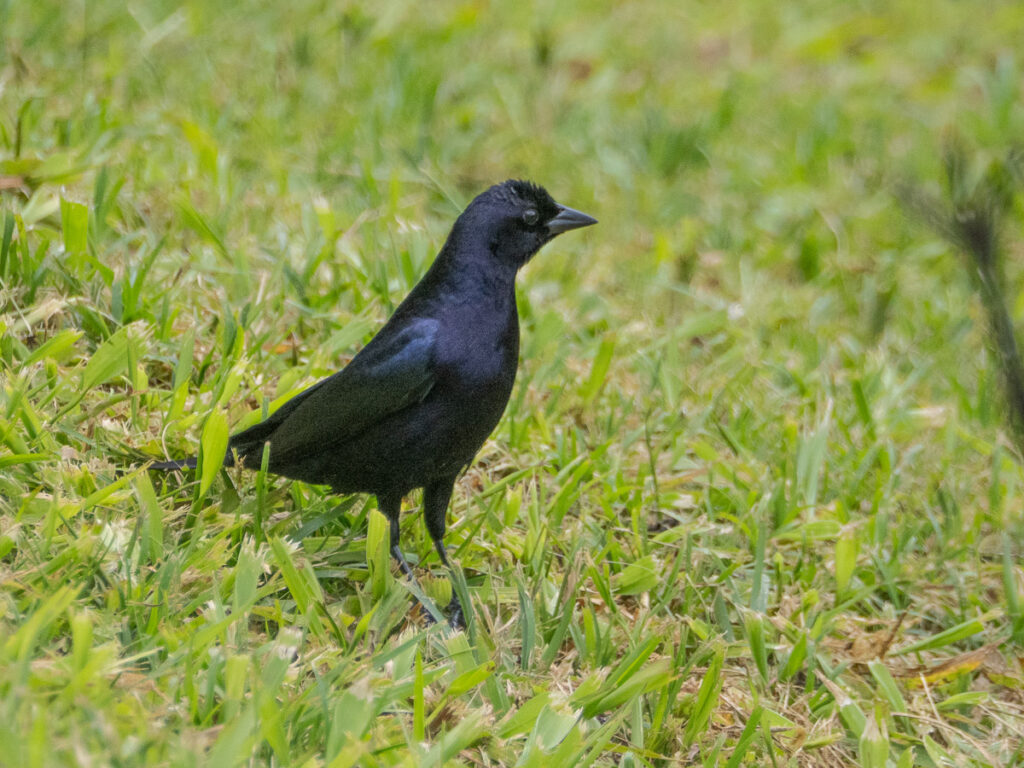
I mainly see these in the São Paulo Botanical Garden but they are pretty common in general. There are some similar species but the Shiny Cowbird is the most common in São Paulo. If you can view it in good light, you can really see the glossy sheen which is important for identification.
Saffron Finch
Sicalis flaveola
Key features: bright yellow finch, orange wash on head, often in small groups.
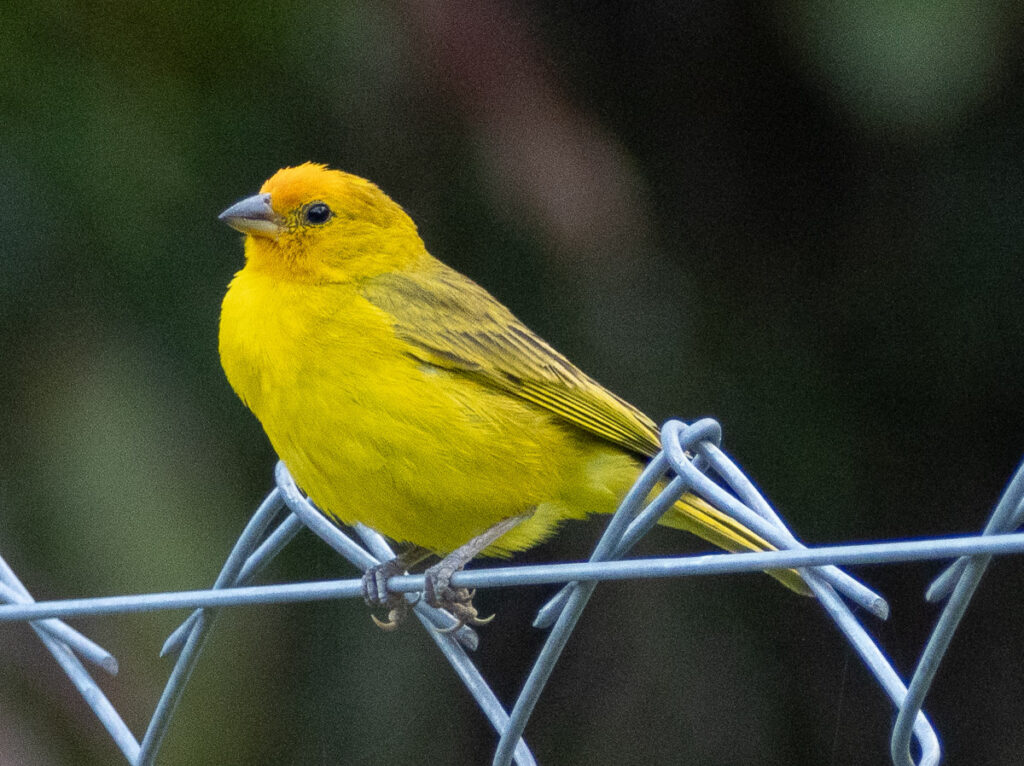
With its bright yellow colouring (at least on the male), the Saffron Finch is pretty unmistakable and common in many parts of South America. Look out for the subtle orange colouring on the head. They are often found in groups of more than four birds.
Palm Tanager
Thraupis palmarum
Key features: olive-green tanager, dark eye, similar shape to Sayaca Tanager.
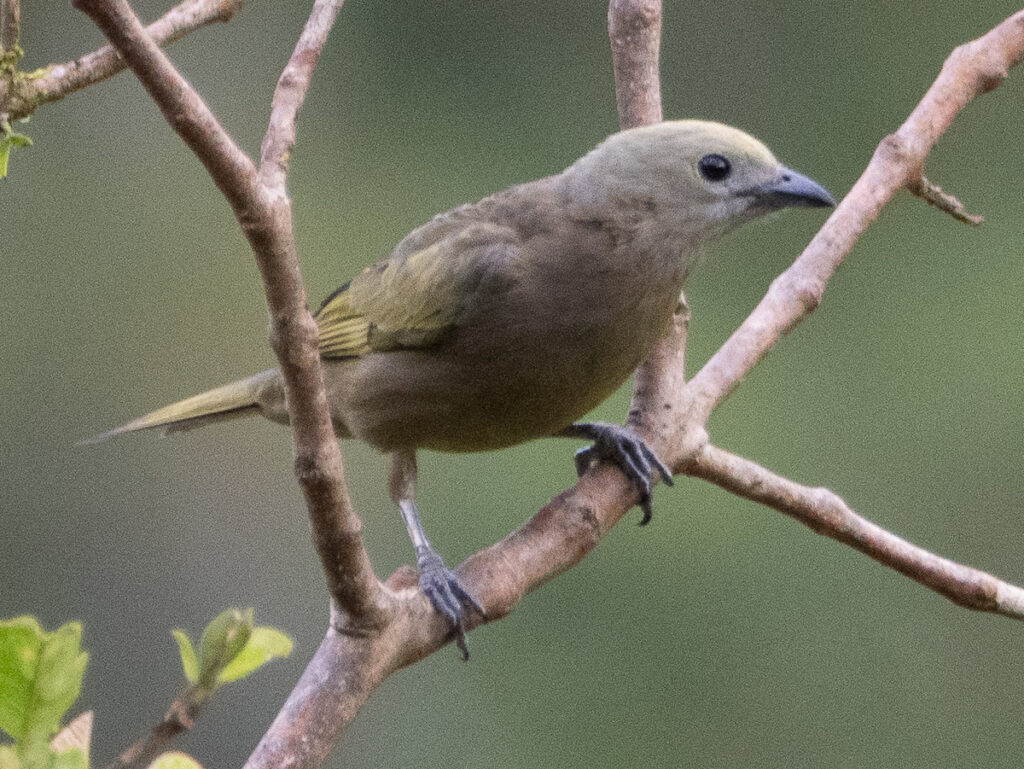
The other common tanager in São Paulo is the Palm Tanager. It is very similar in shape and size to the Sayaca Tanager but has very different colouring with its greeny yellow or olive body. Tanagers are quite varied and indeed are one of the largest families of birds in the world. One thing to look out for is their jet black piercing eyes.